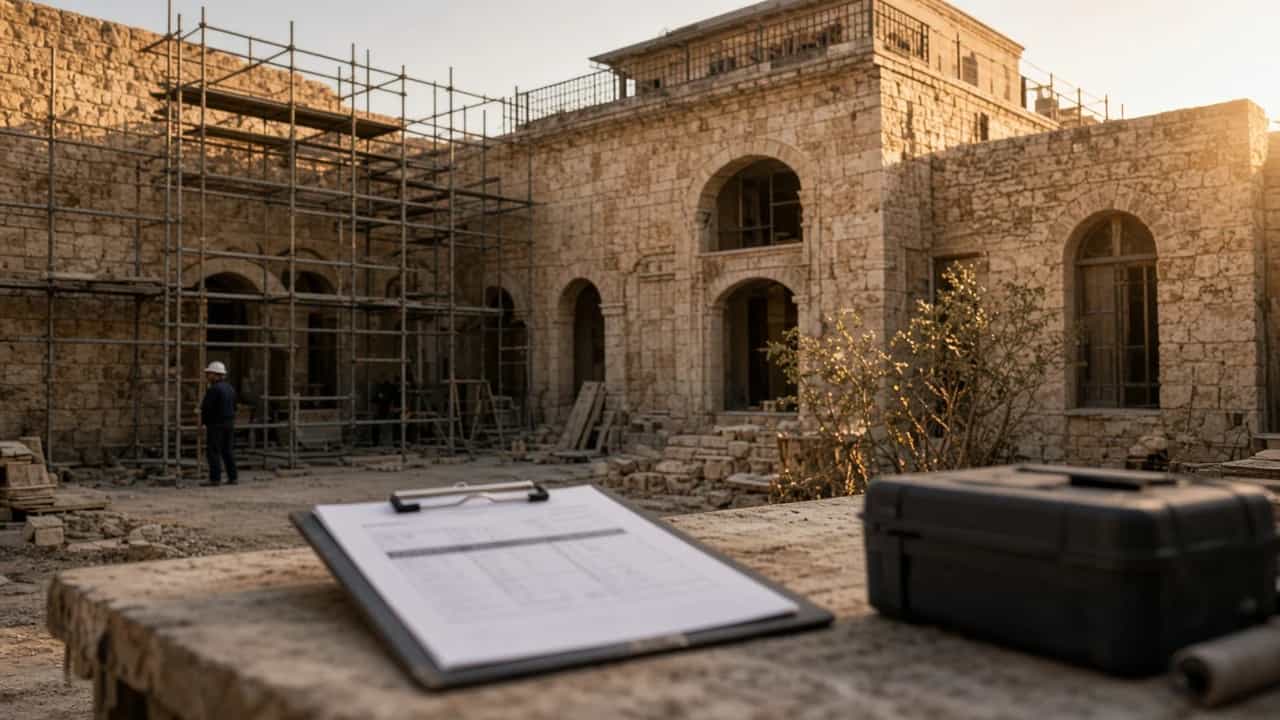

What construction stage gates Damascus programmes actually are
A Damascus programme advances by construction stage gates — written checks at structure, first-fix, pre-finish, and project handover — not by hoping site supervision "looks fine." Each gate needs labelled photos, a scope of work reference, and a named reviewer before the next trade starts. Attendance without a gate is theatre.
Stage gates sit between the calendar and the trades. Construction management sets the programme and commercial rules; site supervision tests whether the work matches drawings and samples at the hold point. When those roles blur into "everyone is on site," covering trades hide defects that become expensive arguments at handover.
This playbook is gate-led. It complements HYMRO's construction project management in Syria framework and the Damascus construction timeline stage map — here the focus is narrower: what must pass before work advances, not only which stages exist on the calendar.
Gate map vs calendar optimism
A hopeful finish date is not a gate map. Owners often approve a programme that names months but never names what must be photographed, measured, or signed before plaster, ceilings, or joinery proceed. Construction stage gates Damascus teams can defend turn that calendar into measurable unlocks.
Gates only work when they map to a measurable construction scope of work. If finishes are "premium", MEP is "as required", and exclusions live in WhatsApp, reviewers are guessing. Name packages, hold points, approved samples, and intentional exclusions so each gate has a test — not an opinion.
Common owner problem: two family members instruct trades between visits while the supervisor has no authority list. Construction management should keep one responsibility matrix — who inspects, who signs gates, who may approve variations — before mobilisation.
Structure and openings gate
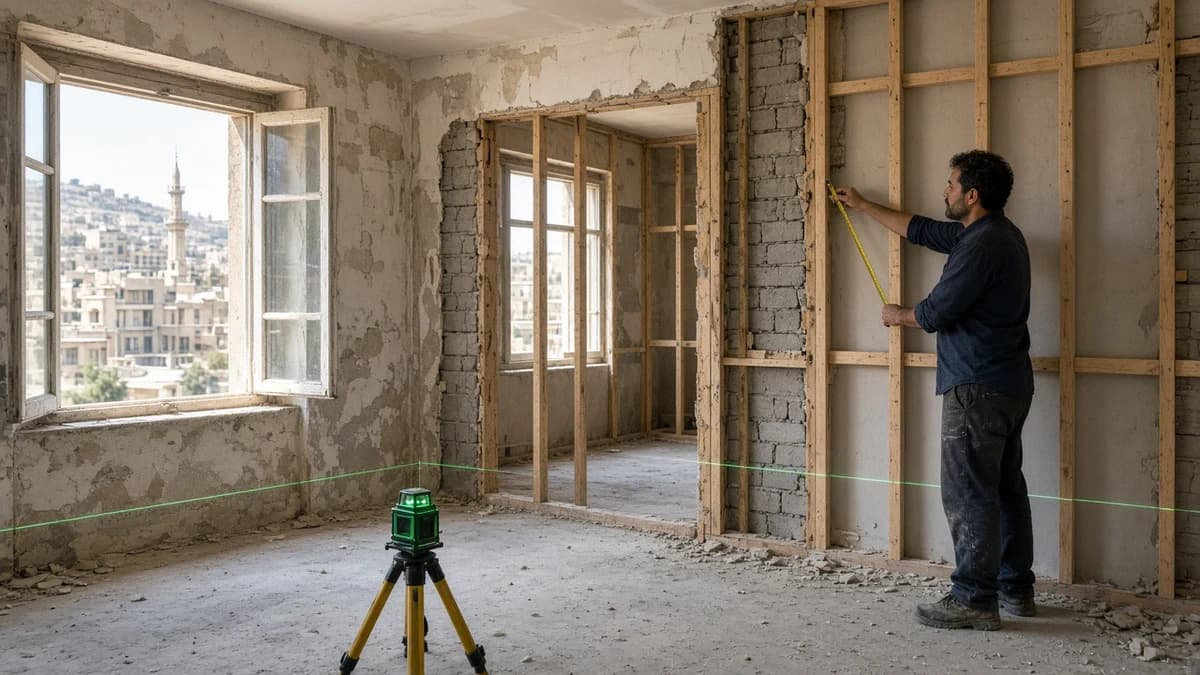
Before partitions or structural adjustments are covered, check alignment against the approved layout, fixing methods, openings and levels re-measured after strip-out, and any fire or acoustic requirements where specified. Photograph elevations and wet rooms that pre-exist the works so later claims do not treat old defects as new snags.
Do not release plaster or cladding over unresolved movement joints, wet substrates, or openings that still disagree with joinery shop drawings. Small survey errors become expensive when marble and wardrobes are already fabricated.
If the building is occupied — common in Damascus apartment blocks — confirm access routes, quiet hours, and protection of finished neighbours before noisy structure work continues. A gate that ignores building protocols invites stoppages that look like "site delays" but started as poor mobilisation discipline.
First-fix MEP gate
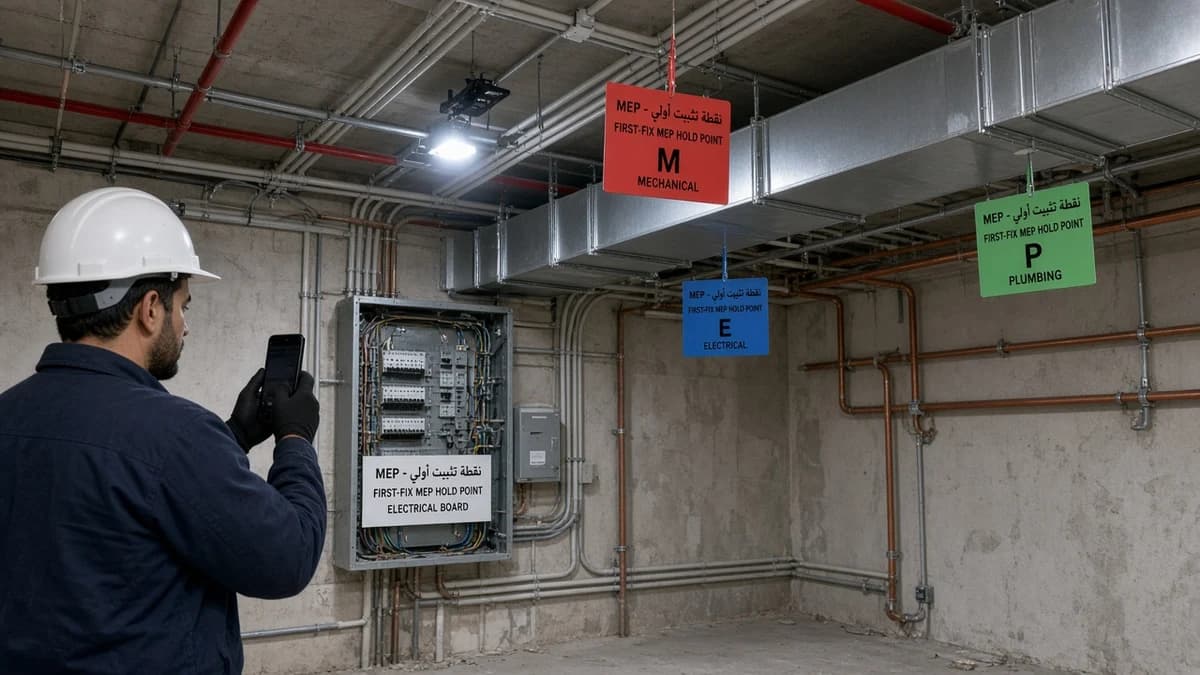
First-fix is the classic hold point. Before ceilings and finishes close, site supervision should verify routes against coordinated drawings, board and valve locations, drainage falls, HVAC provision, and that access panels will remain reachable. Photograph labelled zones — not anonymous close-ups — and file them in the weekly construction management report.
When workplace or dense services are in play, pair this gate with the MEP coordination for office fit-outs freeze logic so finishes do not lock an uncoordinated plenum. Residential electrical and plumbing upgrades need the same discipline before tiles and gypsum close.
If any first-fix line fails, pause the covering trade — not the conversation. Expediting finishes over open first-fix is the most common way Damascus programmes create snag lists that never close cleanly at project handover.
Pre-finish and sample gate checklist

Use this mid-programme gate before second-fix and finishes accelerate: scope revision current; sample board signed for critical finishes; first-fix inspected and photographed; waterproofing tested where wet rooms apply; deliveries checked against approved batches; variations logged with IDs before extra work continues; protection still intact on completed zones; and next week's gates dated on the programme.
Change requests that appear during these checks follow written control — see construction change orders in Syria — so site supervision does not treat a walk-through comment as an instruction.
Overseas owners should receive the same labelled pack as local reviewers. A WhatsApp assurance that "finishes can start" is not a signed sample board and a dated first-fix photo set.
Project handover gate and common mistakes
During finishes, check substrates before each layer, alignment against approved samples, and protection of completed work while other trades pass through. Wet rooms need extra gates: falls, membrane continuity, and sealant sequencing — not only "looks finished".
Project handover is when gates stand down with a pack: as-built notes, closed snag list register, material schedule with revisions, testing records, keys and spares, and maintenance guidance. On programmes such as a Damascus villa restoration, that pack is part of the same discipline as the weekly photo report.
Common mistakes: calling attendance "supervision" without hold points; releasing payment on calendar dates instead of passed gates; covering first-fix without photos; and treating remote owners as optional reviewers. Diaspora families need bilingual packs and a named signer — not a relative's informal OK on site.
When HYMRO should run the stage-gate reviews
HYMRO ties these gates into project management and the wider delivery process. Overseas owners can also use the overseas Syrians path for bilingual reporting. Send your current scope and programme via contact or WhatsApp if you need stage-gate reviews built into the first mobilisation pack — not added after finishes hide the work.