

What is a snag list before handover?
A snag list is the controlled record of defects, omissions, incomplete work, and finish issues found before a property is accepted. It is not a general complaint list and it is not a maintenance schedule. It is the bridge between construction completion and a fair property handover.
In a high-finish home or apartment, a snag can be visible, such as chipped stone, poor paint touch-ups, or a misaligned timber door. It can also be functional, such as weak water pressure, loose sockets, poor drainage falls, noisy hinges, or an HVAC setting that does not match the commissioning record.
For HYMRO clients, snagging sits inside a broader asset-care mindset: the owner should know what is complete, what is pending, who is responsible, and what evidence proves closure. That is why snag lists connect naturally to property services in Syria, but they happen before routine care begins.
How does a snag list Syria workflow keep handover fair?
A snag list Syria workflow protects both sides by making defects specific. Instead of saying "the bathroom is not finished", the list should name the room, describe the defect, attach a photo, record the responsible trade, and agree the expected correction. Specificity prevents arguments at the moment when everyone wants to move quickly.
The strongest workflow begins before the final walkthrough. Collect drawings, finish schedules, approved samples, equipment manuals, commissioning notes, and any earlier site instructions. The inspection team can then compare the delivered property against the agreed scope, not against memory or taste.
This is different from general maintenance because the question is not how to care for an occupied asset. The question is whether the asset is ready to accept. HYMRO's project process keeps handover evidence, approvals, and close-out records visible so defects can be closed before they become ownership disputes.
Who should walk the property inspection route?

A useful property inspection route includes the client or representative, the project lead, and the people who can answer for finishes, MEP, and specialist systems. Too many people create noise; too few create gaps. The goal is to inspect calmly, room by room, with authority to assign actions.
Start outside where water and movement can create hidden consequences: roof edges, terrace drains, balcony falls, stone thresholds, facade sealants, planter waterproofing, and external doors. Then move inside through entrances, salons, kitchens, wet rooms, bedrooms, utility zones, plant rooms, and storage.
Each item should be photographed from enough distance to identify location and close enough to show the defect. A mark on a wall without a room reference is hard to manage later, especially when multiple trades return to the same property.
Which defects deserve priority before keys change hands?
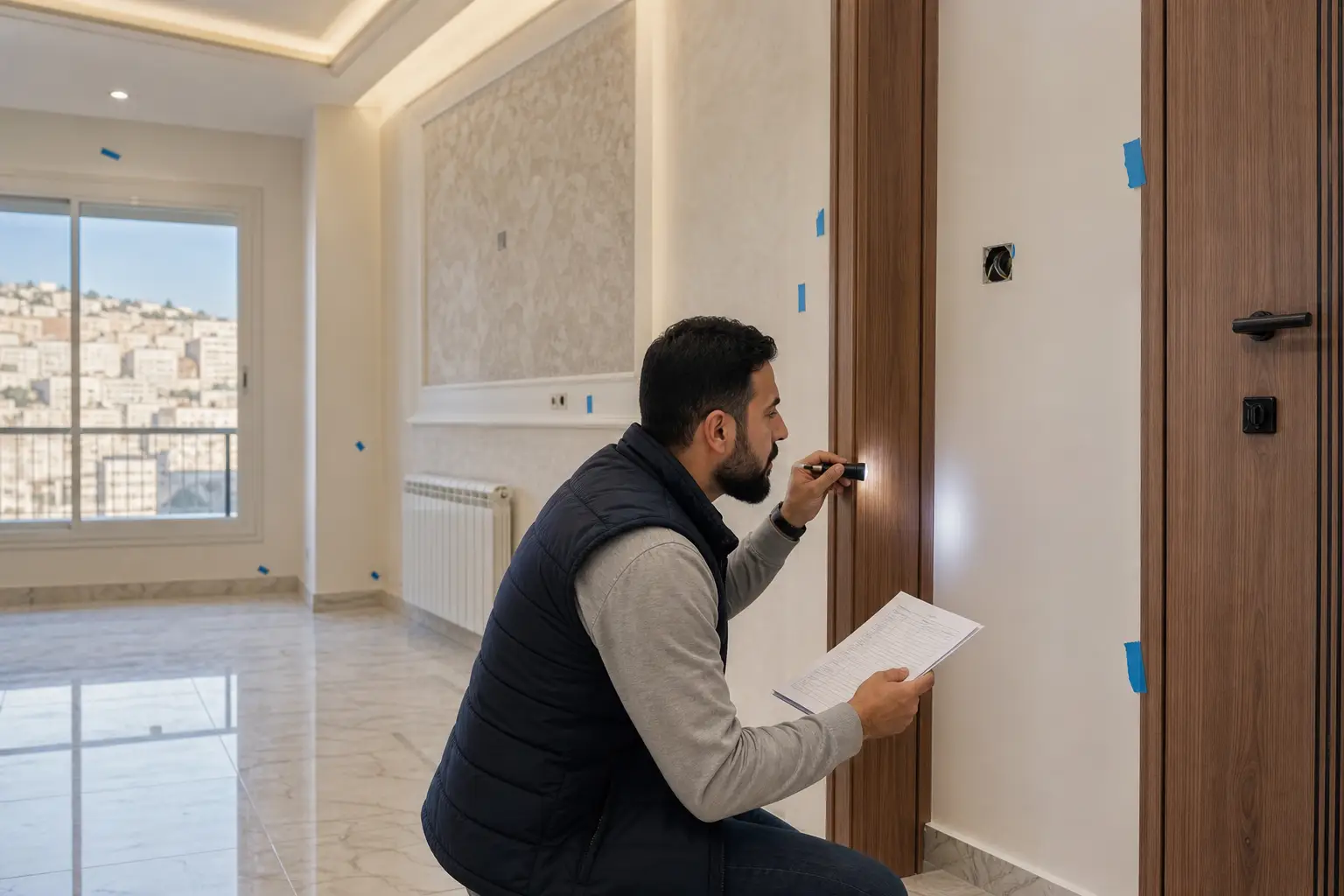
Not every snag has the same risk. Classify items into three groups: critical defects that can damage the property or affect safety, functional defects that prevent proper use, and cosmetic defects that affect finish quality. This keeps the close-out discussion practical.
Critical items include leaks, unsafe electrical points, failed drainage falls, loose balustrades, major door security issues, and MEP faults that could damage ceilings, joinery, or equipment. Functional items include sticking doors, poor water pressure, incomplete controls, missing accessories, and systems that have not been demonstrated properly.
Cosmetic items still matter, especially in luxury work. Scratched marble, uneven paint, cracked grout, poor silicone lines, chipped veneer, stained metalwork, and inconsistent colour matching should be recorded before occupancy because later damage is harder to attribute.
When should defects be fixed, accepted, or monitored?
The decision is not always "fix everything today". Some defects must be corrected before any handover, some can be accepted with a written completion date, and a few should be monitored because the cause needs time or seasonal conditions to reveal itself.
Pre-handover correction is right for water, safety, security, commissioning, access, and anything that could damage finishes once the owner moves in. Conditional acceptance may be reasonable for minor cosmetic work when responsibility, deadline, and access are clear. Monitoring suits issues such as hairline movement, damp readings after repairs, or equipment behaviour that needs repeated checks.
Do not let a practical compromise become a vague promise. If an item remains open, the snag list should show the agreed action, owner of the action, target date, evidence required for closure, and whether final payment, retention, or warranty terms depend on it.
What evidence proves a snag is closed?

A closed snag needs more than a verbal update. The record should show the original defect, corrective action, completion photo, date, and reviewer acceptance. For MEP issues, it may also need a test result, commissioning note, or video showing the system operating correctly.
Keep evidence organised by zone because a handover file may be revisited months later. If a bathroom leak reappears, the owner should be able to see what was found, how it was repaired, who signed it off, and whether related finishes were opened or replaced.
This discipline is especially valuable for overseas owners. When the family cannot attend every site visit, structured records help HYMRO keep overseas Syrians informed without reducing decisions to scattered WhatsApp photos.
How does snagging protect future preventive maintenance?
A clean snag list makes future preventive maintenance easier because it separates original delivery defects from later wear. Without that baseline, an owner may spend the first year arguing whether swelling joinery, stained stone, or a recurring drain smell came from construction, use, cleaning, or neglect.
The handover pack should include the final snag status, warranties, equipment references, finish-care instructions, and access notes for valves, filters, drains, and controls. Once the property is occupied, HYMRO's property maintenance in Syria guide explains how that baseline turns into ongoing inspection and service rhythms.
Good snagging also helps caretakers and facilities teams avoid overreacting later. If a marble threshold was accepted with a small vein, it should not be treated as new damage. If a shower drain needed repeated correction before handover, it should receive early attention in the first maintenance cycle.
Snag-list terms in plain language
Snag: a defect or incomplete item logged before you accept the property. Hold point: a pause for inspection before the next layer covers the work. Handover documentation: the closed list, photos, warranties, and care notes you keep after keys. Preventive maintenance: scheduled care after acceptance — it is not a second snag list.
When should HYMRO support the snag list?
Ask for professional support when the property is high-value, recently renovated, technically complex, managed from abroad, or close to final acceptance. The cost of a missed defect is usually higher than the cost of a disciplined inspection, especially where water, MEP, stone, glazing, or joinery are involved.
HYMRO can help structure the snag list, run the inspection route, separate critical from cosmetic issues, coordinate defect resolution, and prepare handover evidence that owners can actually use. The best time to engage is before the final walkthrough, not after keys are accepted and trades have moved on.
If you are preparing for handover, share the property location, stage of works, available drawings, known defects, and preferred handover date through the contact page. For villas that will remain partly vacant after handover, the preventive maintenance villa guide can help plan the next phase after snag closure.