

Start with project facts and one testable objective
A useful scope starts with facts, not a general instruction to renovate or build. Record the property address or site reference, project type, approximate areas, occupied or vacant status, available surveys and drawings, known access limits, intended use, and the person authorised to approve decisions. State whether the document covers design, enabling works, construction, fit-out, external works, or only selected packages.
Then write the objective in terms that can be tested at completion. "Renovate the apartment" is too broad; "deliver a ready-to-occupy three-bedroom apartment with renewed electrical and plumbing systems, the approved finish schedule, tested equipment, and documented handover" gives the team a shared result. Avoid promising a performance level that has not been designed or verified.
This document is deliberately narrower than a complete construction project management plan for Syria. The scope defines what must be delivered and evidenced; the wider plan governs people, procurement, programme, reporting, and decisions throughout delivery.
Record existing conditions before defining new work
Existing conditions shape almost every renovation price. Attach a dated survey, room photographs, dimensions, visible defects, utility information, and notes on finishes or equipment that will remain. Identify occupied neighbouring areas, shared building services, restricted working hours, lift or stair access, storage limits, and any owner possessions that require protection.
Do not describe concealed conditions as known facts. If walls, floors, or ceilings have not been opened, say what has and has not been inspected. A scope can require controlled opening-up, testing, and a written finding before the related permanent work is priced or released. That keeps an assumption from quietly becoming a contractor obligation or an owner-funded surprise.
Break the work down by location and trade
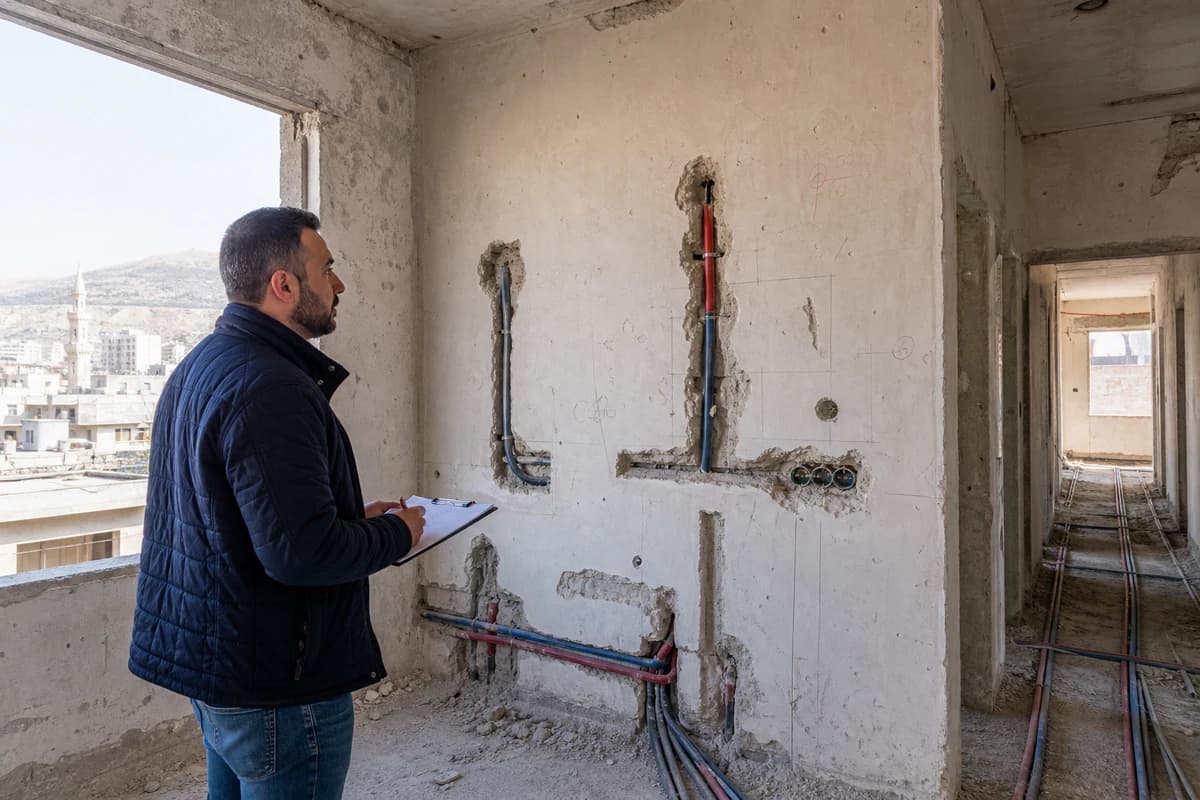
Organise the scope so a reader can find an obligation without interpreting a long narrative. A practical structure uses location first—external areas, entrance, salon, bedrooms, wet rooms, kitchen, plant spaces—then the relevant trade within each location. For a larger build, trade-first packages may work better, but every line should still identify where the work applies.
Describe the full operation, not only the visible finish. A bathroom line may need protection, removal, substrate repair, waterproofing, flood testing, falls, tiling, sanitaryware installation, sealants, cleaning, and evidence before use. An electrical line may need containment, cabling, accessories, labelling, testing, making good, and updated circuit information.
Use the same package structure when requesting prices, so each bidder responds against comparable lines. The contractor and project manager roles guide explains who executes the defined package and who can help the owner test its completeness, price, and evidence.
Make every deliverable measurable
Replace subjective words such as "good", "premium", or "complete" with a defined result. Name the drawing, schedule, approved sample, manufacturer instruction, mock-up, test, tolerance, or acceptance record that governs the work. Where a specific product is not yet selected, define the required function, size, finish, allowance basis, approval method, and who bears any difference after selection.
Write each item with an action, object, location, standard, and evidence. For example: prepare and repaint bedroom walls shown on drawing A-12, using the approved colour and system, after substrate repairs and a signed sample area, with uniform coverage under normal room lighting. The evidence may be an inspection record and completion photographs rather than a vague statement that painting is done.
Set quality and material standards before procurement
Create a finish and material schedule that the scope can reference. Record the material description, intended location, dimensions or performance where relevant, colour or finish, approved sample status, supplier information if known, and substitution rule. Samples should carry an approval date and revision so a later photograph does not override the signed choice.
State how substitutions are proposed. A substitute should not be accepted because it looks similar in a message; it should be compared for dimensions, performance, maintenance, compatibility, warranty availability, lead time, cost, and visual effect. Require written approval before purchase or installation, particularly for stone, tiles, sanitaryware, lighting, joinery hardware, and mechanical equipment.
State exclusions and owner-supplied items explicitly
An exclusion is not a footnote; it defines the commercial boundary. List design fees, authority or building charges where applicable, structural investigation, utility upgrades, loose furniture, appliances, specialist systems, night work, temporary accommodation, off-site storage, and any other item not included. Do not assume that an obvious omission will be understood the same way by every bidder.
For owner-supplied items, record exactly who selects, purchases, pays, transports, insures, stores, checks, and installs each item. Add the information or delivery date the contractor needs and the consequence if it arrives late. The contractor should still confirm dimensions, interfaces, and installation requirements before related work becomes irreversible.
Separate owner choices from contractor design responsibility. If the owner selects a tile, the contractor may remain responsible for checking the substrate, adhesive compatibility, setting-out, joints, falls, and installation quality. A responsibility should not disappear merely because the physical item came from another party.
Map responsibilities and trade interfaces

Add a simple responsibility matrix for every important deliverable: who prepares it, who reviews it, who approves it, who executes it, and who receives the record. Include the owner, designer, project manager, main contractor, specialist subcontractors, suppliers, building management, and third parties only where they genuinely have a role.
Interfaces deserve their own scope lines because failures occur between packages. The joinery supplier needs final floor levels and wall conditions; the stone installer needs waterproofing and falls accepted; the ceiling team needs MEP tests closed; the kitchen installer needs electrical, water, drainage, ventilation, and appliance data coordinated. Name the party that leads each check and the evidence required before release.
Include protection, access, temporary services, waste removal, making good, cleaning, and final adjustment in the matrix. These supporting duties often sit between trades and become extras when nobody owns them. A clear interface line prevents each contractor from pricing only the centre of its package.
Build programme hold points around supervision evidence
The scope should name mandatory hold points, not attempt to replace the full programme. Typical gates include acceptance of setting-out, reinforcement before concrete, waterproofing before covering, first-fix MEP before ceiling or wall closure, substrate approval before finishes, sample approval before repeated installation, commissioning before practical completion, and snag closure before final acceptance.
For each gate, state the notice period, required attendees, documents or tests, photographs, approval authority, and what happens when work proceeds without release. HYMRO's project management service connects these scope gates to site supervision, progress reporting, and milestone decisions.
Owners managing a property remotely should request labelled photographs by room or zone, marked-up drawings for concealed services, inspection records, and short videos where operation matters. The workflow for overseas Syrians building at home is strongest when the evidence format and approval turnaround are agreed before mobilisation.
Control pricing, provisional sums, and changes
Require a price breakdown that mirrors the scope. It should show package totals, taxes or charges where relevant, assumptions, quantities, rates for measurable work, owner-supplied items, and the validity period. A single lump sum may remain the contract price, but the supporting breakdown makes omissions and later changes easier to evaluate.
Use a provisional sum only where the work cannot yet be defined, and label the reason. State the allowance, what it includes, who investigates or selects the final solution, the deadline for doing so, and how the adjustment will be calculated. Do not use provisional sums to postpone ordinary detailing that could be completed before tender.
Every change should identify the original scope line, reason, revised description, cost effect, programme effect, and approval status. Require written authorisation before changed work begins, except for a genuinely urgent action governed by an agreed emergency procedure. Keep a variation register so the latest forecast is visible rather than reconstructed from messages and invoices.
Define completion and project handover deliverables

Define practical completion in the scope: the works are usable for their intended purpose, required tests have passed, essential approvals and records are available, major defects are resolved, and only minor items remain on an agreed list. Keys alone do not prove that the contracted result has been delivered.
List the handover package: approved snag status, test and commissioning records, equipment schedules, warranty and supplier contacts, operating instructions, finish-care guidance, as-built or marked-up service information where relevant, spare materials or keys, and dated completion photographs. Name the format, language where necessary, recipient, and due date for each record.
Set the defects notification and close-out process before final payment. The snag list guide for Syria shows how to identify, assign, evidence, and close defects without confusing delivery issues with future maintenance.
Use this pre-issue scope checklist
Project basis—confirm the site reference, objective, areas, intended use, surveys, drawing list, current conditions, access limits, occupied zones, and authorised decision-makers. Scope structure—confirm every location and trade is covered, all deliverables are measurable, quantities and assumptions are labelled, and design responsibilities are separated from selections.
Commercial boundaries—confirm inclusions, exclusions, owner-supplied items, provisional sums, quantities, rates, payment milestones, and change rules. Delivery controls—confirm the responsibility matrix, trade interfaces, procurement approvals, programme constraints, hold points, site supervision evidence, protection, cleaning, and waste duties.
Close-out—confirm testing, commissioning, snagging, practical-completion criteria, warranties, as-built information, care instructions, training or demonstrations, spare items, and defects follow-up. Finally, add a title, issue date, revision, author, approver, page count, attachment register, and distribution list so everyone can prove which version governs the work.
Issue one controlled scope before requesting final prices
Review the draft with the owner, designer, cost adviser or project manager, and the people who understand the existing site. Resolve comments into one tender revision rather than allowing bidders to price different email trails. Give all bidders the same reply to material questions and record any addendum against the scope revision.
HYMRO's project delivery process can help turn a property brief into a controlled scope, supervised programme, and usable handover. Begin with the site information you have, but keep unknowns visible until inspection or design closes them.