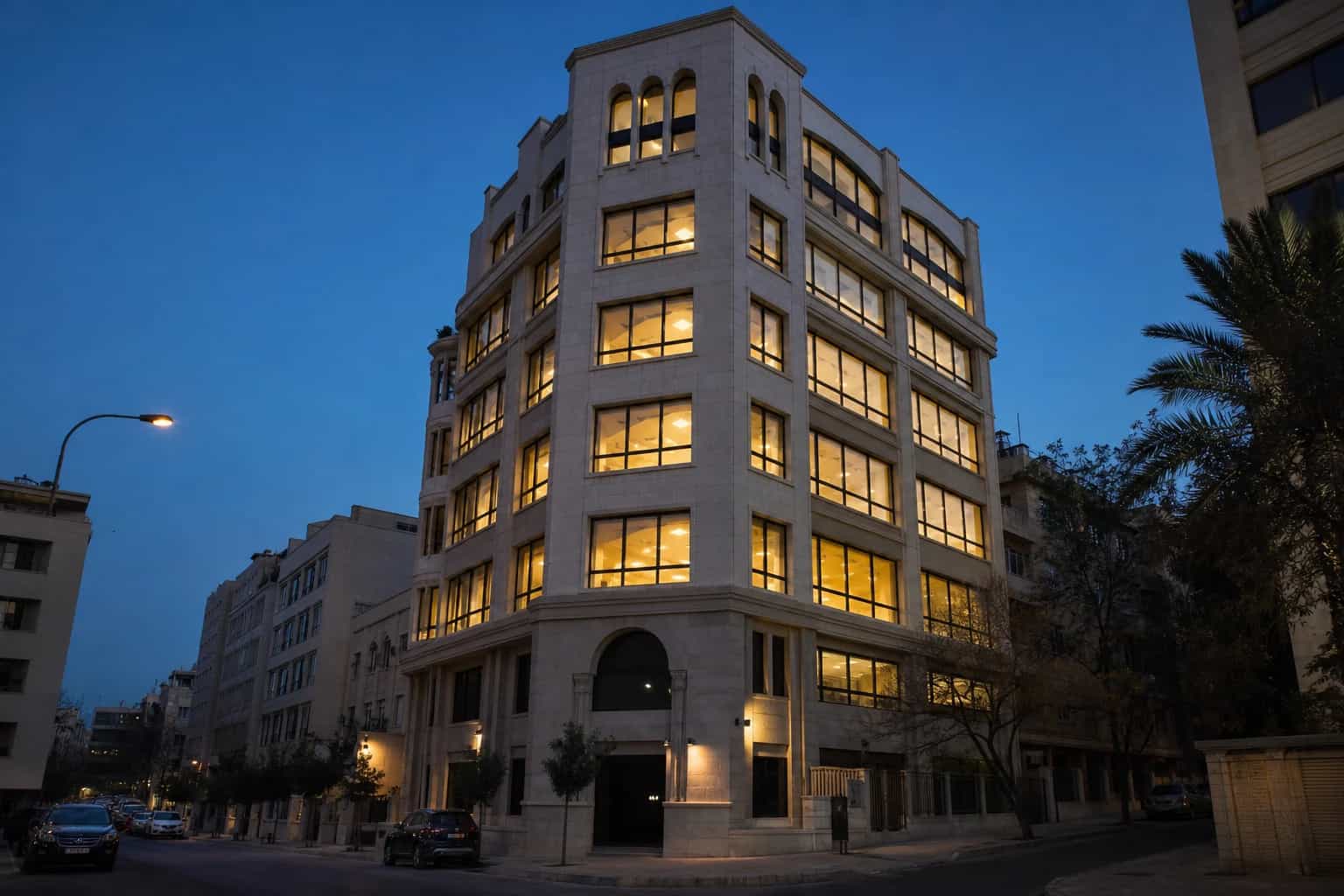

Office maintenance Damascus starts with disruption, not dust
An occupied workplace fails in public. A blocked drain in a villa is private; a failed indoor unit during a client meeting is a brand event. Office maintenance Damascus programmes should therefore be judged by disruption avoided — cancelled rooms, noisy daytime call-outs, and surprise shutdowns — not by how often someone mops the pantry.
This is a checklist for live floors, not a seasonal villa plan and not a fit-out brief. Homes can wait for a convenient Saturday. Offices share lifts with other tenants, host visitors on short notice, and depend on HVAC, lighting, and WCs that must work every working day. The care calendar has to respect landlord access rules, security, and the hours when staff actually need the rooms.
If the workplace is still being built or stripped, start with the office fit-out in Damascus guide instead. Use this article once desks are occupied and the question is how to service plant, finishes, and wet rooms without stopping the floor.
When can technicians work without stopping the floor?
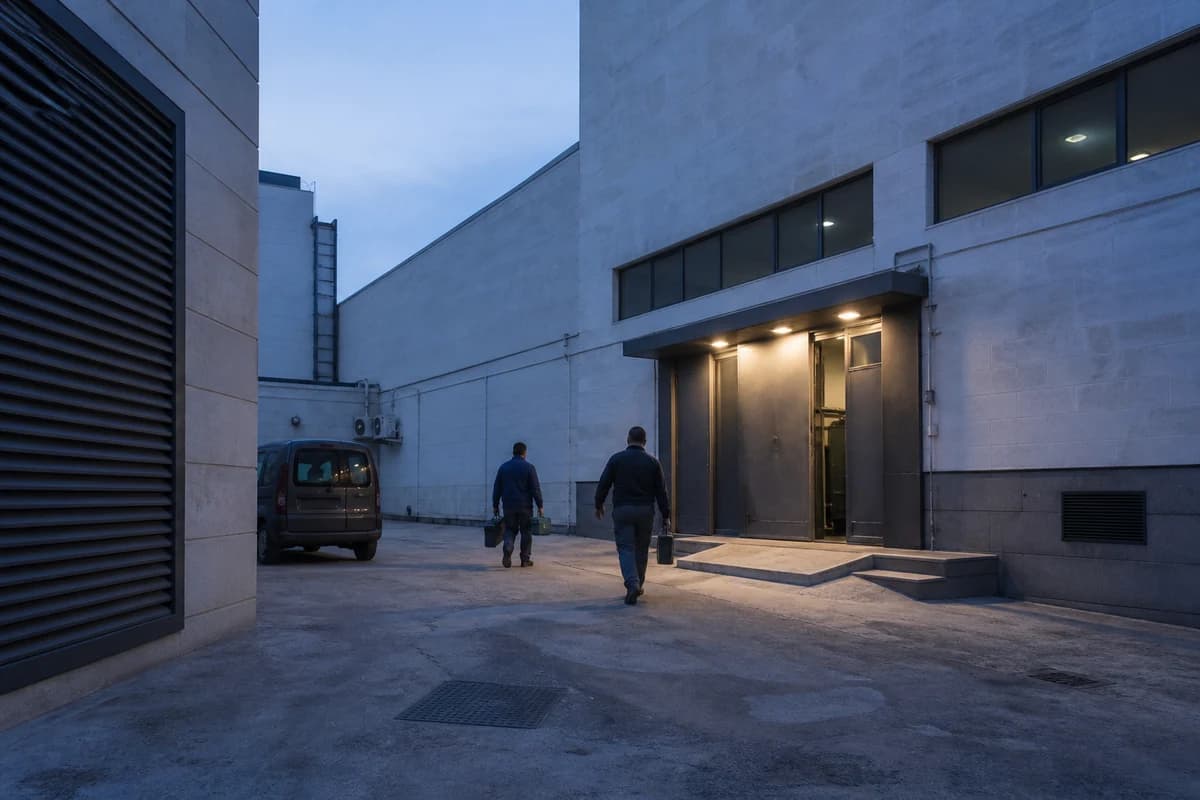
Split every task into noisy, shutdown, or quiet. Filter changes, visual checks, hardware tightening, and finish care can often sit in a defined after-hours window. Core drilling, condensate pump replacement, or a riser isolation belongs in a named shutdown with IT and facilities on the same message — not a "quick visit" at 11:00.
Damascus commercial buildings add landlord rules: goods-lift hours, weekend noise limits, corridor protection, and waste removal timing. Write those constraints into the care brief so technicians do not discover them at the service door. A two-hour evening slot that is booked every fortnight beats an all-day disruption that nobody authorised.
Construction inside an occupied floor is a different problem. If you are opening ceilings or moving partitions, follow a phased office renovation plan rather than stretching a maintenance ticket until it becomes demolition.
What should a workplace property inspection actually record?
A workplace property inspection is not a purchase survey and it is not a cleaning walk. It should map each finding to a room, a system, and an access window. Note which indoor units serve the boardroom, which WCs are visitor-facing, where the comms cupboard sits, and which plant is landlord versus tenant. Vague lines such as "HVAC checked" do not help you decide whether the next visit can happen after 18:00 or needs a weekend isolation.
Photograph labelled locations: diffuser staining, dripping condensate, loose floor boxes, pantry leaks, flickering drivers, and door hardware that fails under daily traffic. Rank items as urgent (safety or imminent shutdown), scheduled (next window), or monitor. The ranking is what keeps a small leak from becoming a Thursday morning flood in the open plan.
Inspect at a time that matches risk. After a heatwave, check condensate and filters. After winter rains, check envelope leaks at window heads and terrace doors if the floor has them. After a busy visitor week, check WCs, reception lighting, and door closers. Inspection timed to use catches more than a generic quarterly stroll.
The disruption checklist: rooms, systems, and access windows
Use this as a working list, not a slogan. For HVAC and ventilation: filters, condensate trays and pumps, unusual noise, set-point drift, and whether the boardroom and open plan share a failing unit. Book filter and tray work after hours; book isolations with a named rollback if the floor cannot lose cooling the next morning.
For power, lighting, and IT adjacency: emergency lighting test windows, driver failures over desks, floor-box tightness, and any work that needs a comms-room key. Do not treat a server cupboard as a janitor store. For wet rooms and pantry: traps, isolation valves, slow drains, and water alarms where fitted — visitor WCs fail in public, so they sit higher than a back-of-house sink.
For envelope and common edges: window hardware, blinds, terrace doors if present, and corridor protection after any visit. For safety and access: fire-door closers, exit lighting, and who holds keys for plant, roof, and risers. End every visit with a one-page log: what was done, what waits for the next window, and what would stop the floor if it waited another week.
Preventive maintenance that protects meetings, not only plant
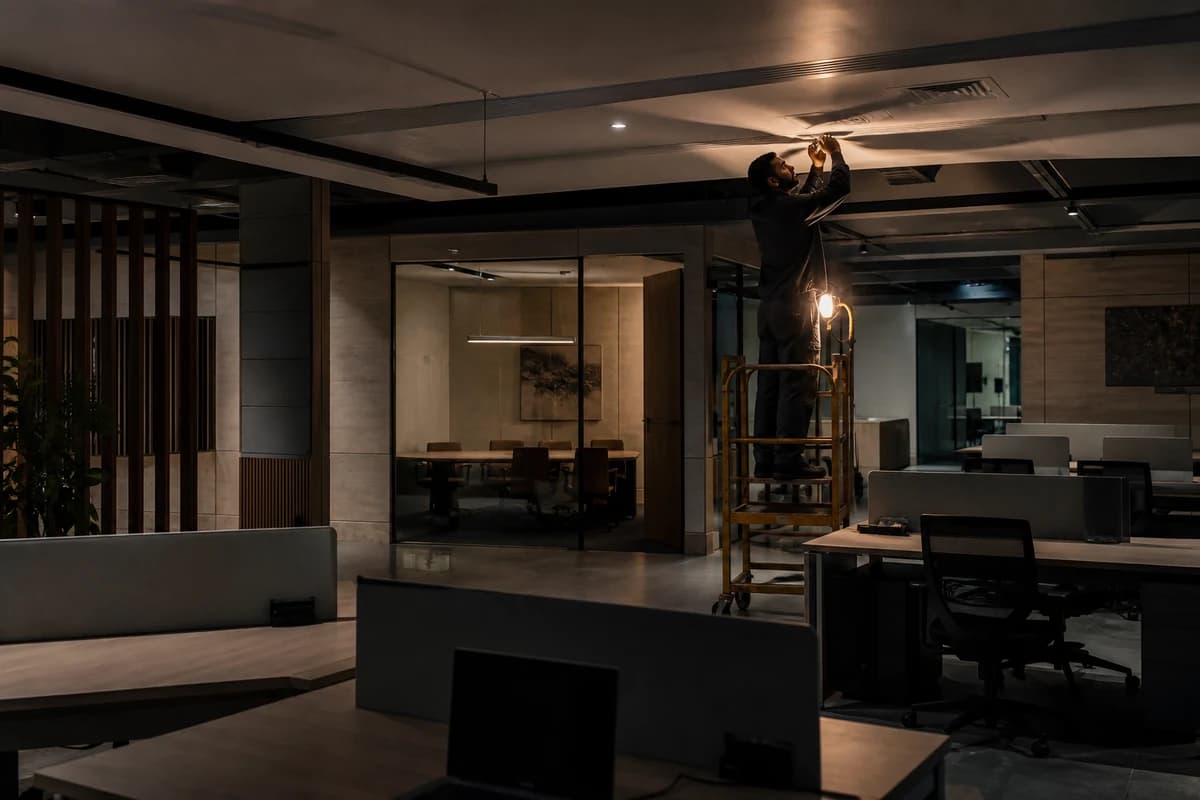
Preventive maintenance on a Damascus office is successful when the next board meeting still has cooling, the reception still looks finished, and nobody had to relocate desks because a tray overflowed. Filters, condensate, lighting drivers, and door hardware fail quietly, then all at once. A calendar that only reacts to WhatsApp complaints is already late.
Match the rhythm to occupancy. A floor used five days a week needs tighter HVAC and WC cycles than a suite used for occasional leadership visits. Peak summer is not the week to discover that filters were skipped in April. If the office closes for holidays, run a pre-return check so the first day back is not a commissioning exercise.
Workplaces delivered as a finished suite still need this rhythm after staff move in. The executive office suite pattern shows how reception and meeting rooms can open while remaining fit-out continues — the same zones then need after-hours care so the finish standard survives daily use.
Property services versus call-outs in a live Damascus office
Property services for an occupied office should look like a retained programme: named windows, a single coordinator, photo logs, and a spend threshold for emergencies. Ad-hoc call-outs solve today's leak and train the building to fail in public. A retained team already knows the landlord's lift hours, the filter sizes, and which indoor unit serves the client rooms.
Keep repair tickets separate from renovation. A dripping tray is care. A failed distribution that needs new indoor units and ceiling works is a scoped upgrade — often easier to run as a short after-hours programme than as an endless maintenance chat. Mixing the two hides cost and keeps the floor in a permanent "almost fixed" state.
HYMRO packages this through property services so workplace care sits beside the commercial and fit-out teams rather than as an informal side job. When inspection shows the floor needs a reset, the ticket closes and a separate proposal opens.
What property handover should leave the facilities team
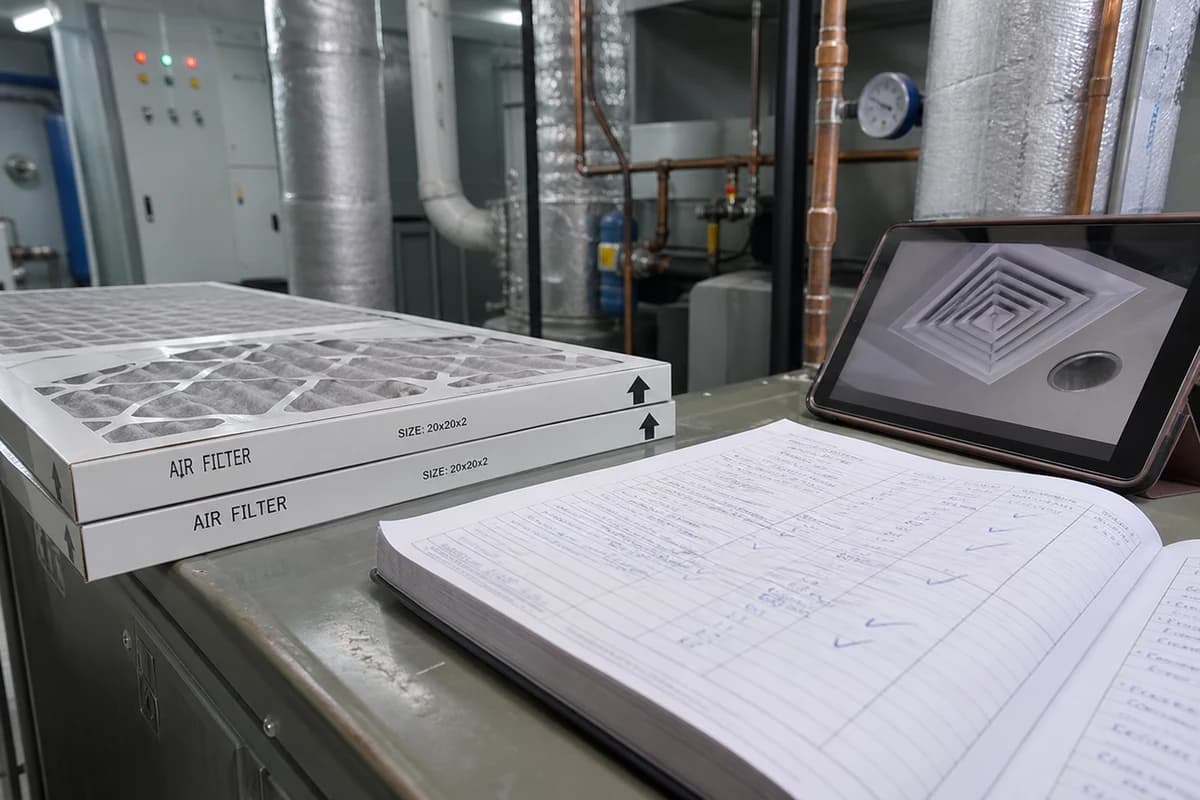
Property handover after an office programme should not be a box of unmarked keys. The facilities pack needs as-built MEP notes, indoor-unit locations, filter sizes, isolation points, lighting driver types, BMS or thermostat logic if fitted, warranty contacts, and the snag status at acceptance. Without that baseline, every technician is guessing — and guessing happens during working hours.
If handover files are thin, the first maintenance month should rebuild them: photograph plant, label valves, record landlord versus tenant interfaces, and store the pack where more than one person can open it. Diaspora directors who visit quarterly still need that file in the cloud, not in a drawer the receptionist cannot find.
Close-out discipline is part of how HYMRO office fit-outs are meant to finish. The same documents become the maintenance baseline so aftercare does not start from a blank floor plate.
When HYMRO should own the office care programme
Brief HYMRO when the floor is occupied, when landlord access is tight, when HVAC or wet rooms have already caused a public failure, or when directors abroad need photo evidence instead of a verbal "all fine". A disruption-first programme is also useful after a new fit-out, when finishes are still under warranty and small defects should not wait until they stain stone or swell joinery.
Send a floor plan if you have one, typical working hours, known weak rooms, last service dates, and whether you can grant after-hours access. Start the conversation through contact. HYMRO can then propose an inspection, a retained preventive calendar, or a short after-hours works package — without treating your workplace like an empty shell.