

What does office fit-out in Damascus mean from empty shell to move-in?
Office fit-out in Damascus means taking an empty commercial shell — bare concrete, open risers, and a landlord base build — through coordinated MEP, partitions, office interiors, and snag closure until staff can occupy without chasing defects desk by desk. Move-in ready is a documented freeze of those layers, not a polished photo of empty desks.
Damascus commercial stock ranges from newer tower plates with generous floor-to-ceiling heights to converted units that need structural review before open-plan layouts are assumed. Treating the programme as a single lump-sum quote before a measured survey is where programmes slip — ceiling void, power density, and acoustic separation should freeze before decorative spend consumes the budget.
This guide follows the delivery rhythm HYMRO uses on office and mixed-use projects in Syria — from first brief through documented handover — so you know what to expect before your commercial contractor mobilises on site.
How should you scope the programme before the shell changes hands?
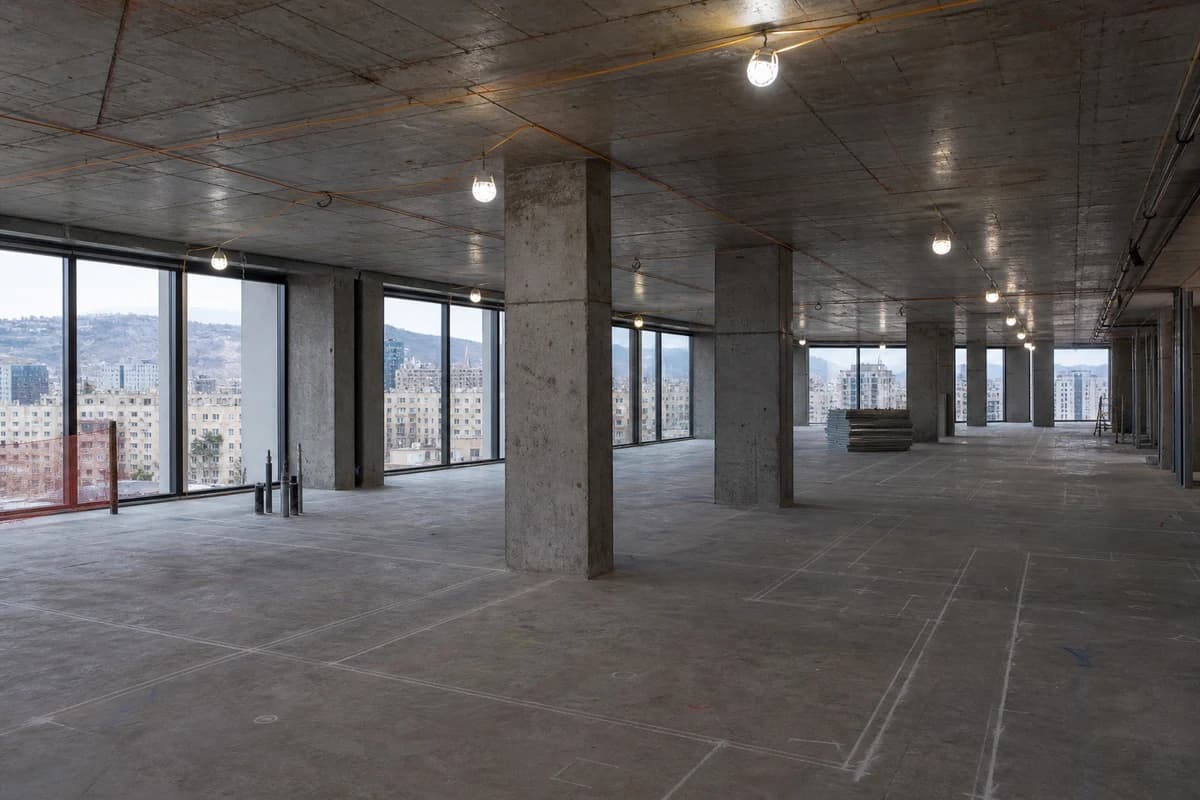
Strong office fit-out programmes open with a written brief: headcount and growth assumptions, meeting-room ratios, reception presence, IT and AV requirements, and any branded elements the landlord must approve. A site survey should confirm slab levels, column grids, existing MEP capacity, and whether after-hours work is permitted in the building.
Your scoped proposal should separate landlord works from tenant fit-out, list material allowances for flooring and joinery, and tie payments to milestones — slab preparation, first-fix MEP, ceiling grid, second fix, and furniture installation. Overseas decision-makers should approve this document before deposits release, especially when finishes are procured from outside Syria.
If you are comparing proposals, align programme length, MEP assumptions, and furniture scope before comparing headline totals. Two office fit-out quotes with different ceiling strategies or power densities are not comparable until those lines match.
Why must structure and MEP lock before office interiors?
Office interiors only perform when the services behind them are sized correctly. Power circuits, data pathways, HVAC zoning, and fresh-air rates should be resolved in the first-fix phase — not after ceiling tiles and feature lighting are ordered. Undersized electrical distribution or poorly planned diffusers are expensive to correct once partitions and flooring are complete.
Acoustic performance depends on ceiling specification, partition types, and how meeting rooms are boxed. If your programme includes executive boardrooms or client-facing suites, agree target privacy levels early and mock up a typical bay before rolling the specification across the floor plate.
On mixed programmes — workspace plus showroom or client lounge — segment MEP and access routes so retail fit-out loads do not compete with office circuits on the same distribution board without a deliberate load review.
Office interiors that match how your team works
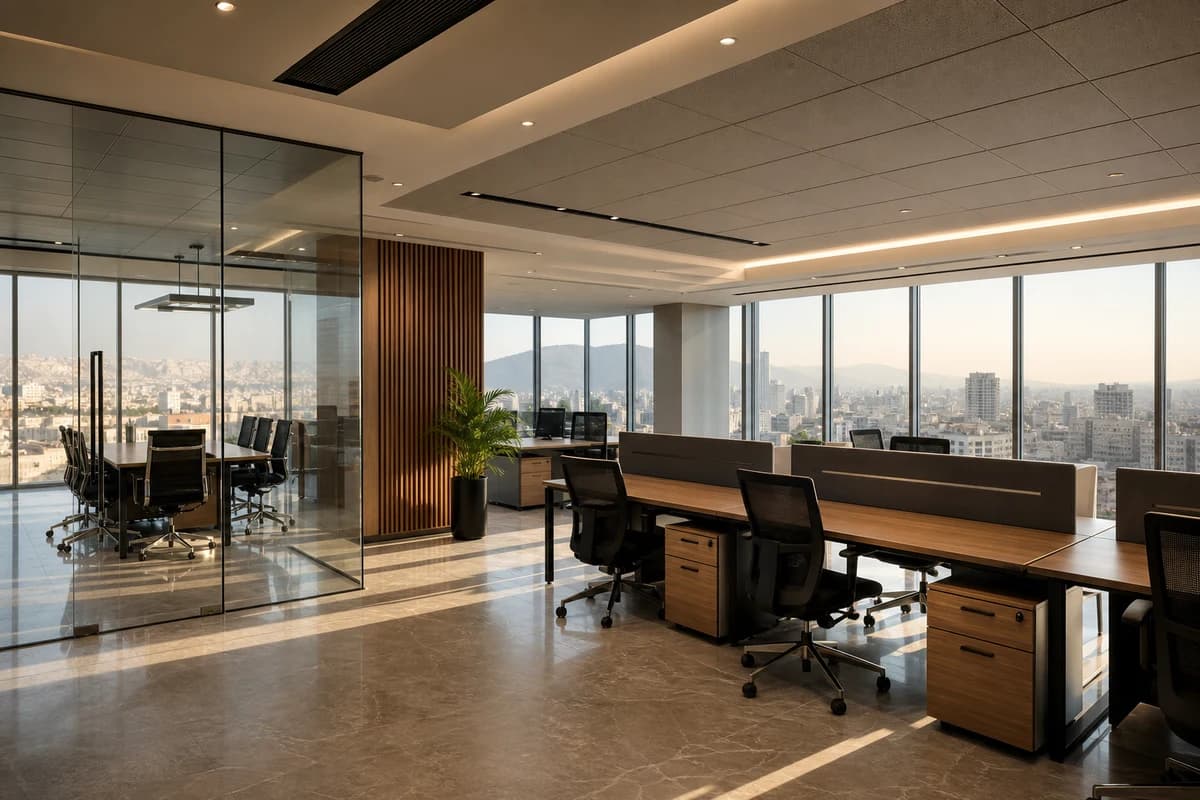
Layout decisions should follow workflow, not only aesthetics. Open-plan benches suit collaborative teams; focused work still needs quiet rooms, phone booths, or enclosed offices with proper acoustic seals. Reception and waiting areas set the first impression — allocate budget there before scattering spend on decorative elements staff rarely see.
Material choices for office interiors should balance durability with maintenance. High-traffic corridors and lift lobbies need harder-wearing flooring than executive suites. Joinery, glazing, and wall finishes should be approved from sample boards or mock-up corners before full installation — standard practice on corporate programmes where brand colours and veneer grades must match intent.
Furniture procurement should align with data and power locations fixed during first fix. Desks ordered before floor boxes are marked often force awkward cable runs or visible trunking — a common snag on move-in week when the space looks finished but ergonomics suffer.
When do retail fit-out needs overlap your office programme?
Ground-floor showrooms, client lounges, and staff retail concessions increasingly sit inside the same Damascus lease as back-of-house offices. Retail fit-out demands — display lighting, heavier floor loads, feature facades, and public access routes — should be scoped as distinct work packages with their own approvals and handover dates.
If trading areas must open before back-office fit-out completes, agree phased possession with your commercial contractor. Zone the programme so reception or showroom areas reach practical completion while ceiling and MEP works continue elsewhere — the same approach HYMRO used on the boutique retail flagship programme alongside corporate workspace delivery.
Do not assume office-grade finishes translate to retail exposure. Shopfront materials, signage interfaces, and after-hours access for merchandising teams need explicit lines in the scope — not assumptions buried in a generic fit-out allowance.
What should you expect from your commercial contractor?

A commercial contractor should coordinate licensed trades, issue structured site reports, and log snags against milestones — not simply pass packages to subcontractors. Ask how variations are priced, who attends weekly coordination meetings, and how photo documentation is shared with overseas stakeholders.
Supervision quality shows in the details: aligned ceiling grids, flush skirting at partitions, and labelled MEP before boards close. Request inspection hold points at first-fix MEP, pre-ceiling close, and pre-handover walkthroughs. Verbal approvals on extras are where office fit-out budgets drift.
For reference on delivery standards, review how supervised corporate programmes are structured on office fit-outs and commercial construction engagements — then hold your contractor to the same milestone discipline.
Shell-to-move-in scope freeze checklist
Shell survey freeze — confirm slab levels, column grid, riser locations, landlord base-build limits, and after-hours access rules in writing before any tenant trade mobilises.
MEP freeze — lock power density, data pathways, HVAC zoning, fresh-air assumptions, and distribution-board capacity before ceiling tiles or feature lighting are ordered.
Partition and acoustic freeze — approve partition types, meeting-room boxing, and privacy targets for boardrooms or client suites before open-plan furniture layouts are finalised.
Ceiling and lighting freeze — agree ceiling strategy, diffuser locations, and lighting scenes so second-fix trades are not guessing after boards close.
Finish and joinery freeze — fix flooring grades, wall finishes, glazing, and joinery allowances from sample boards or mock-up corners before full installation.
Furniture and IT freeze — align desk layouts with floor boxes and data points already marked during first fix; do not order furniture against unverified power locations.
Snag and handover freeze — walk the floor plate with a dated snag list, test sockets, data, HVAC modes, door closers, and emergency fittings, and file as-built MEP notes plus warranty contacts before keys are accepted.
Ready to brief HYMRO for your Damascus office programme?
When you are ready to scope your own programme, HYMRO can outline milestones and allowances for office fit-outs in Damascus — typically within one business day of a clear brief. Share floor plans, headcount, and whether you need phased possession.
Start through contact. For overseas-led programmes, our process page explains how approvals and reporting are structured from first enquiry through handover.