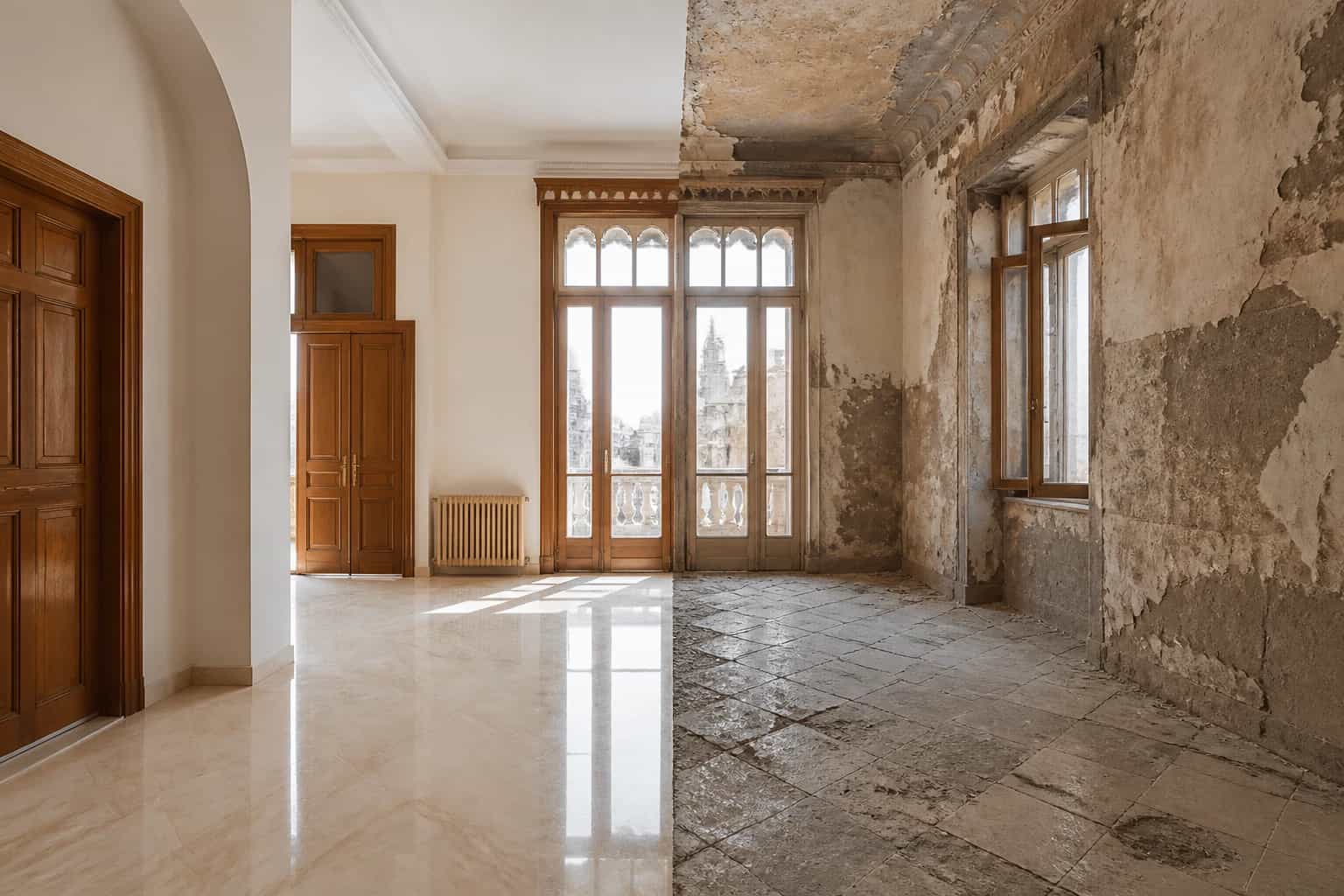

Maintenance vs renovation Syria: the decision that protects the asset
Choosing maintenance vs renovation Syria owners face is rarely aesthetic alone. Paint a failing wet room and you hide moisture. Rebuild a room that only needed servicing and you spend capital that should have gone to preventive care elsewhere. The right path starts with evidence, not with a mood board or a single contractor quote.
This guide is a decision tool. It does not replace a property inspection, and it is not a seasonal villa maintenance checklist. It helps you decide whether the property needs care, corrective works, a scoped renovation, or a sequenced mix — before money and disruption are committed.
What maintenance really covers on a Syrian property
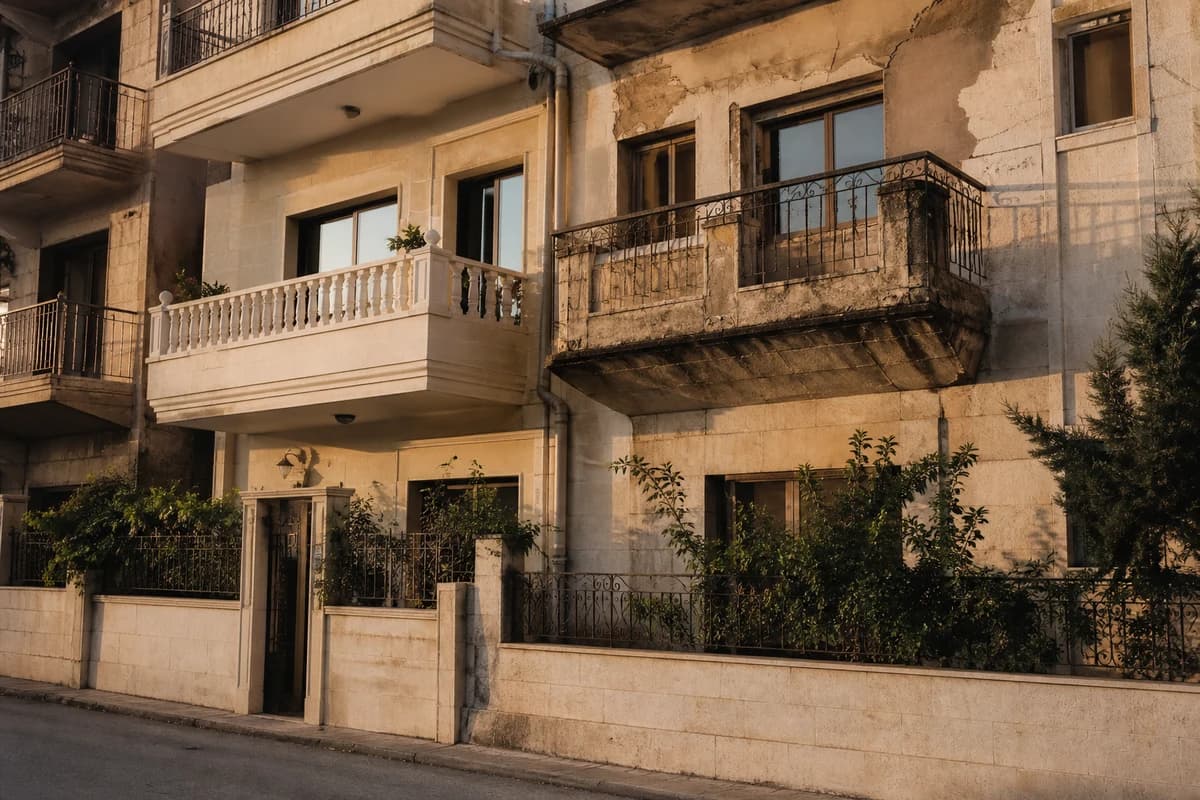
Maintenance keeps installed systems and finishes performing as designed. Filters, seals, drainage clearing, hardware adjustment, stone care, joinery humidity control, and scheduled MEP servicing sit here. The building fabric stays the same; reliability and appearance are protected.
Preventive maintenance works when the underlying waterproofing, electrical capacity, structure, and layout are still sound. If those layers have failed, maintenance becomes a recurring bill that never resets the risk.
For how retained care programmes work after acceptance, see HYMRO's property maintenance in Syria guide — then return here when the question is whether care is still the honest answer.
When renovation is the honest choice
Renovation changes the property: rebuilt wet rooms, new MEP routes, layout adjustments, full finish packages, or corrective strip-out behind tired surfaces. Choose renovation when defects are systemic, when finishes repeatedly fail in the same zones, or when the home no longer matches how the family will live.
A cosmetic refresh is not renovation. Painting over soft plaster, replacing only the visible tile face, or swapping fixtures without correcting drainage falls often recreates the same failure within a season. If inspection finds failed waterproofing, undersized boards, or chronic moisture paths, renovation — not polish — is the path.
When the decision tips toward rebuild, HYMRO's luxury renovations programmes treat corrective works and finish packages as one controlled scope rather than a chain of reactive call-outs.
How a property inspection sorts the fork in the road
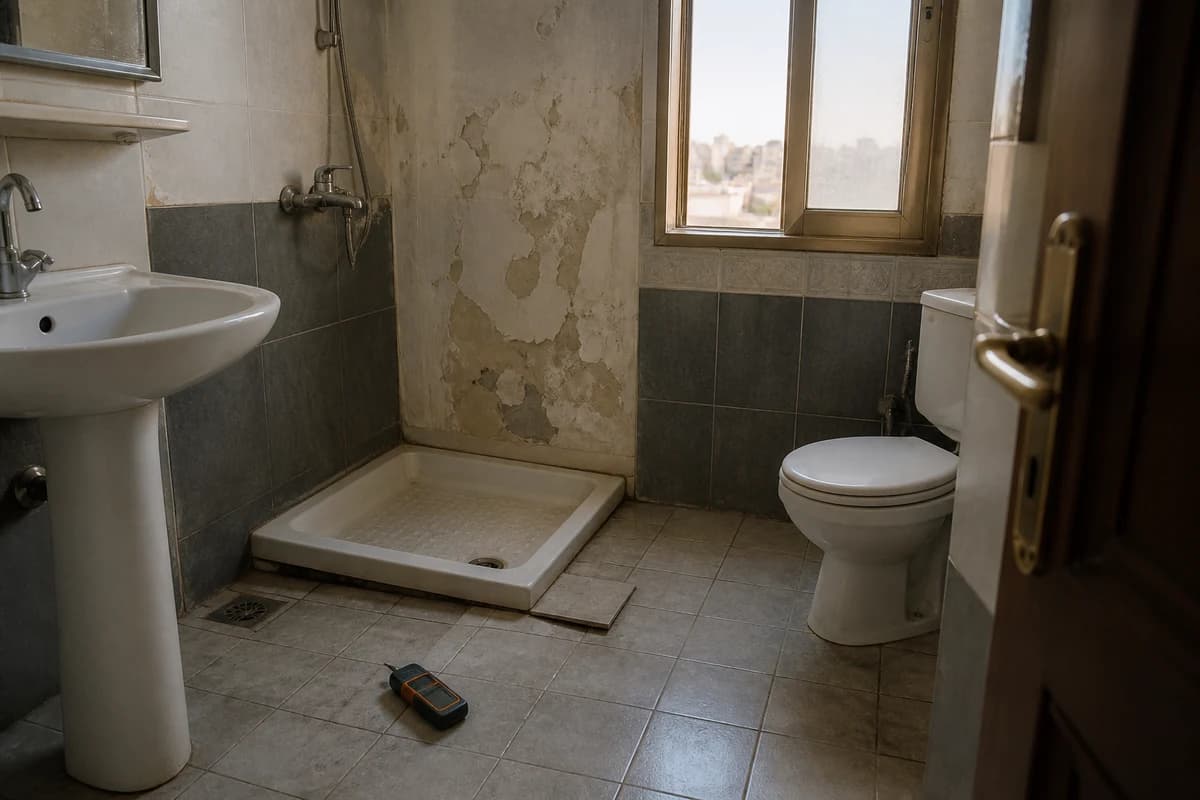
A property inspection should classify findings as urgent, recommended, or monitor — and map each item to maintenance, repair, or renovation. Moisture readings, hollow plaster, wet-room odours, board capacity, and balcony thresholds are decision evidence, not decorative notes.
Ask for photos tied to locations and a plain-language path: service now, repair now, renovate this zone, or monitor until the next season. Vague conclusions such as "needs work" force owners to guess which budget they are approving.
Owners buying or preparing works in Damascus can use the property inspection Damascus walkthrough as the diagnostic step before choosing a path.
Preventive maintenance, repairs, and renovation — three different budgets
Keep three budgets mentally separate. Preventive maintenance is scheduled care that reduces failure risk. Repairs restore a failed part without changing the wider design. Renovation resets systems, layouts, or finish generations. Mixing them into one vague "works" quotation hides whether you are protecting value or rebuilding it.
Property services can deliver the first two on a retained rhythm and coordinate the third when inspection proves it is needed. The mistake is appointing a renovation crew for filter changes — or expecting a cleaner and a plumber to solve failed waterproofing.
For diaspora-owned homes, this separation also clarifies reporting: weekly care notes look different from a renovation milestone pack, and owners should not receive one format for both.
Property handover records that change the answer
Property handover files — snag status, as-built MEP notes, warranties, and care guidance — tell you whether defects are leftover delivery issues or later wear. Without that baseline, every stain looks like a renovation trigger and every noisy valve looks like neglect.
If handover records are missing, rebuild the baseline with inspection before choosing a path. Painting or partial upgrades without knowing what was installed often creates a second renovation sooner than expected.
When records exist, use them: match spare parts, respect warranty windows, and schedule preventive maintenance against the systems actually fitted rather than a generic annual package.
Decision checklist: maintain, renovate, or sequence both
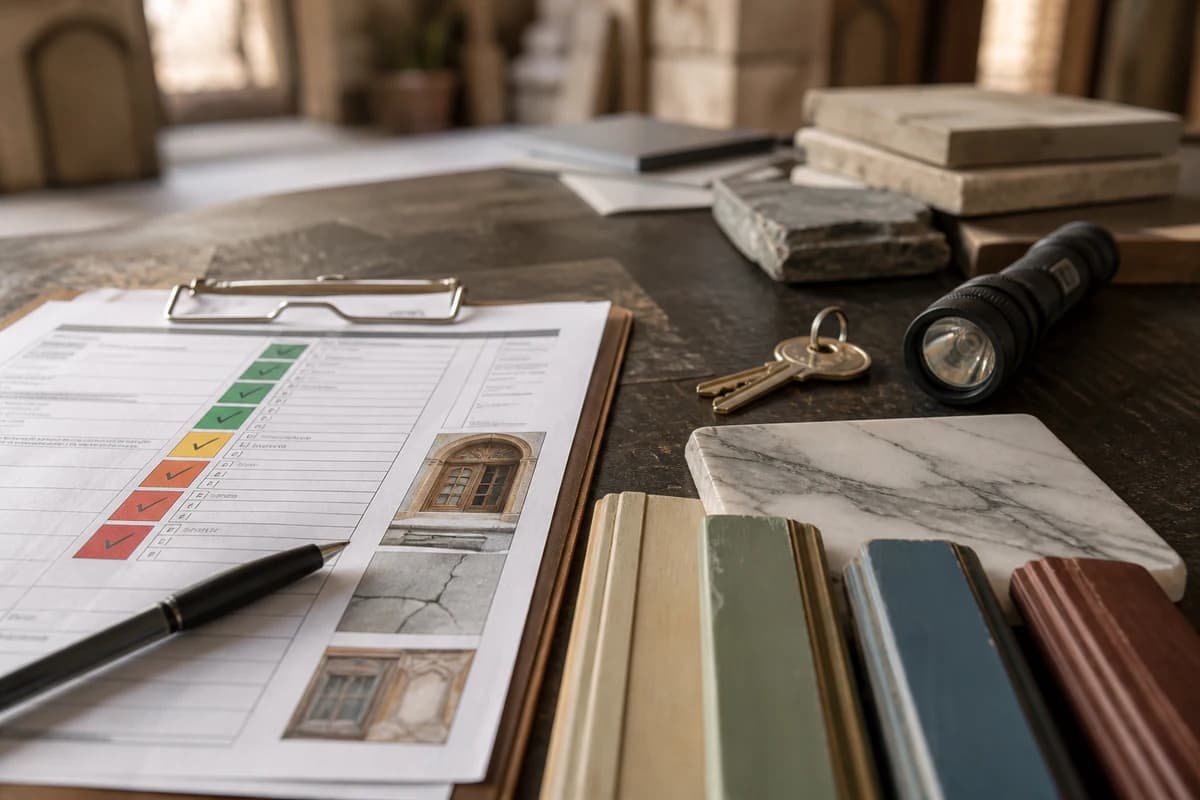
Maintain when structure, waterproofing, and MEP capacity are sound; failures are local; finishes respond to care; and occupancy patterns fit a service rhythm. Renovate when moisture or services are systemic, layouts no longer work, finishes have reached end of life, or repeated repairs no longer hold.
Sequence both when urgent stabilisation is needed now and a renovation window is planned later — for example, stop active leaks and secure electrical safety, then renovate wet rooms in a defined phase. Write the sequence so temporary repairs are not mistaken for the final solution.
A short written decision note — inspection date, path chosen, zones affected, and next review date — keeps family representatives and property services teams aligned after the meeting ends.
When HYMRO should help you choose the path
Brief HYMRO when the property is older, partially renovated, rarely occupied, moisture-prone, or when family members disagree on whether to "just maintain" or "fully renovate". Independent triage saves money when emotion or a single quote is pushing the wrong path.
Share photos, known defects, occupancy pattern, last property handover date if known, and your target use window through contact. HYMRO can then recommend inspection-led property services, a renovation scope, or a sequenced plan that protects the asset without overbuilding the brief.