

Why property maintenance in Syria starts at handover, not after the first crack
A renovation or new-build programme can deliver immaculate marble, bespoke joinery, and commissioned MEP — and still lose asset value within seasons if nobody owns care after keys change hands. Property maintenance in Syria is not an optional extra for luxury homes; it is how you protect the investment you made in finishes, plant, and envelope performance.
Owners abroad face a sharper version of the same problem: distance turns small leaks, filter neglect, or stone staining into expensive surprises discovered months late. The shift from construction to occupancy is where preventive discipline either begins or never starts.
This guide compares the approaches owners use after property handover — what to inspect, what to service on schedule, and when structured property services outperform ad-hoc call-outs.
What property handover should leave you ready to maintain
Property handover is the baseline for every maintenance decision that follows. You should receive snag status, as-built MEP notes, warranty contacts, and care guidance for stone, wood, glazing, and mechanical systems. Without that pack, even simple property inspection visits lack a reference point for what was installed and how it should behave.
If you completed a recent build or renovation, cross-check handover documents against what you see on first occupancy — water pressure at every outlet, HVAC modes, door and window operation, and drainage at terraces and planters. Log discrepancies early while contractor access may still be available.
Diaspora owners should store handover records digitally where family representatives and future property managers can reach them. The construction project management guide explains what a strong handover document set looks like at programme close — the same files become your maintenance starting point.
Property inspection rhythms that catch problems before rework
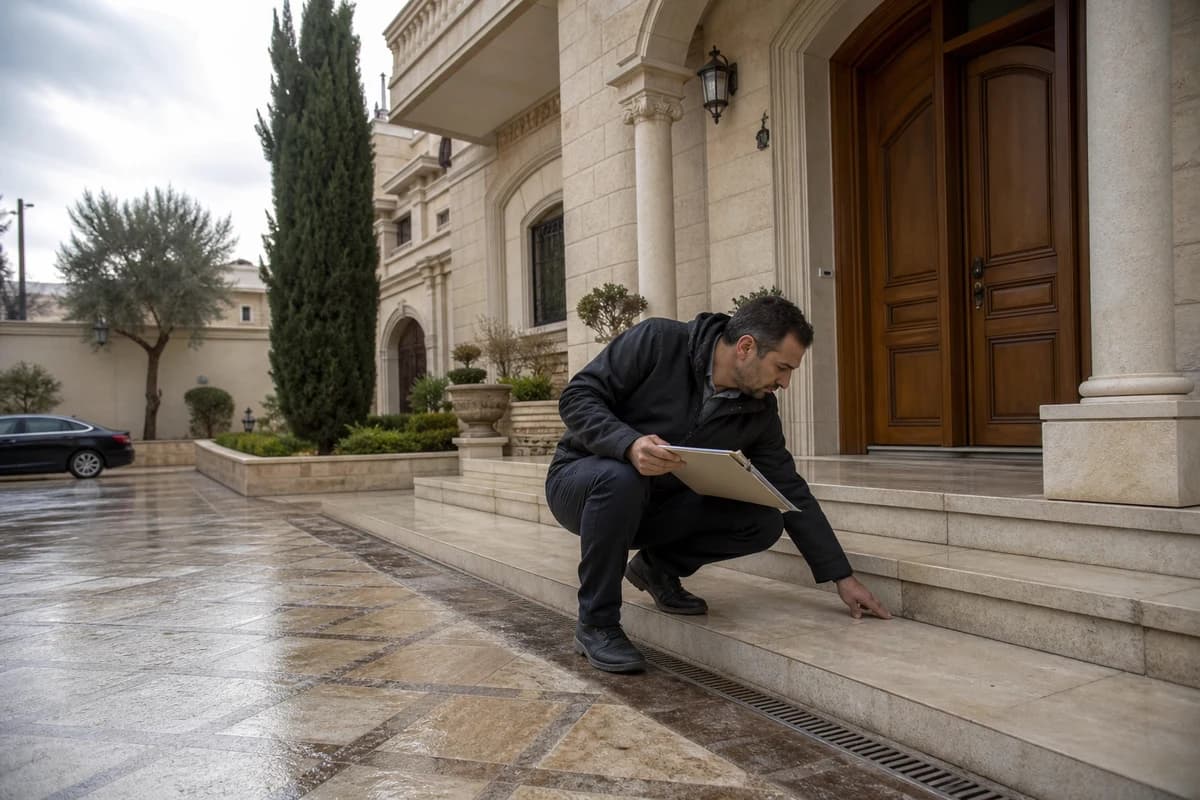
Property inspection is most valuable on a schedule, not only after visible damage. A practical cadence for occupied luxury homes in Syria combines seasonal exterior checks — drainage, stonework joints, planter waterproofing — with quarterly interior walkthroughs of wet rooms, kitchens, and plant rooms.
Inspection visits should produce written notes and photos, even when no work is required. That history helps you distinguish gradual wear from sudden failures and supports insurance or warranty conversations when defects appear.
For unoccupied properties, increase inspection frequency. Empty villas lose early warning signs — humidity build-up, pest entry, or irrigation faults — that a monthly visit catches before finishes suffer.
Preventive maintenance priorities for Syrian finishes and MEP
Preventive maintenance targets systems and surfaces that fail quietly. HVAC filters, condensate lines, water treatment where fitted, and generator test runs belong on a calendar — not a reminder triggered by breakdown. MEP neglect is the most common cause of ceiling stains and joinery swelling in otherwise well-built homes.
Marble and natural stone need pH-appropriate cleaning and periodic sealing in high-traffic zones. Wood joinery benefits from humidity-aware care — especially in properties that cycle between occupied and vacant periods. External metalwork and glazing hardware need scheduled lubrication and corrosion checks.
Align preventive tasks with how the property is used. A family villa occupied year-round differs from a diaspora home opened for summers — each needs a tailored schedule, not a generic checklist copied from another asset.
Property services: planned programmes vs reactive call-outs

Property services range from one-off repairs to retained programmes with inspection, preventive maintenance, and emergency response. Reactive call-outs solve today's leak; planned property services reduce the probability that tomorrow's leak damages stone, cabinetry, or ceilings beneath.
A retained programme typically bundles scheduled visits, a single point of contact, priority attendance for urgent issues, and reporting owners abroad can review without flying in. That model suits diaspora families who need eyes on asset value between visits.
Compare providers on what is included — inspection frequency, trade licences held, response times, and whether reporting includes photos with location labels. A lower annual fee with vague visit scope often costs more once emergency rates stack up.
Reactive repairs vs preventive care — which protects asset value?
Reactive maintenance wins on short-term cash flow — you pay only when something breaks. Preventive maintenance wins on total cost of ownership for premium finishes and mechanical plant, where a single water incident can exceed years of scheduled care.
The verdict for most luxury properties in Syria is hybrid: retain preventive schedules for MEP, envelope, and stone; use reactive response for minor wear items that do not threaten adjacent finishes. The mistake is treating all maintenance as reactive until a room is offline.
If your property sat through a full luxury renovation, the finish quality you paid for assumes ongoing care. Deferred maintenance erodes the visual and functional premium that justified the original programme — often faster than owners expect.
Maintenance records diaspora owners should keep current
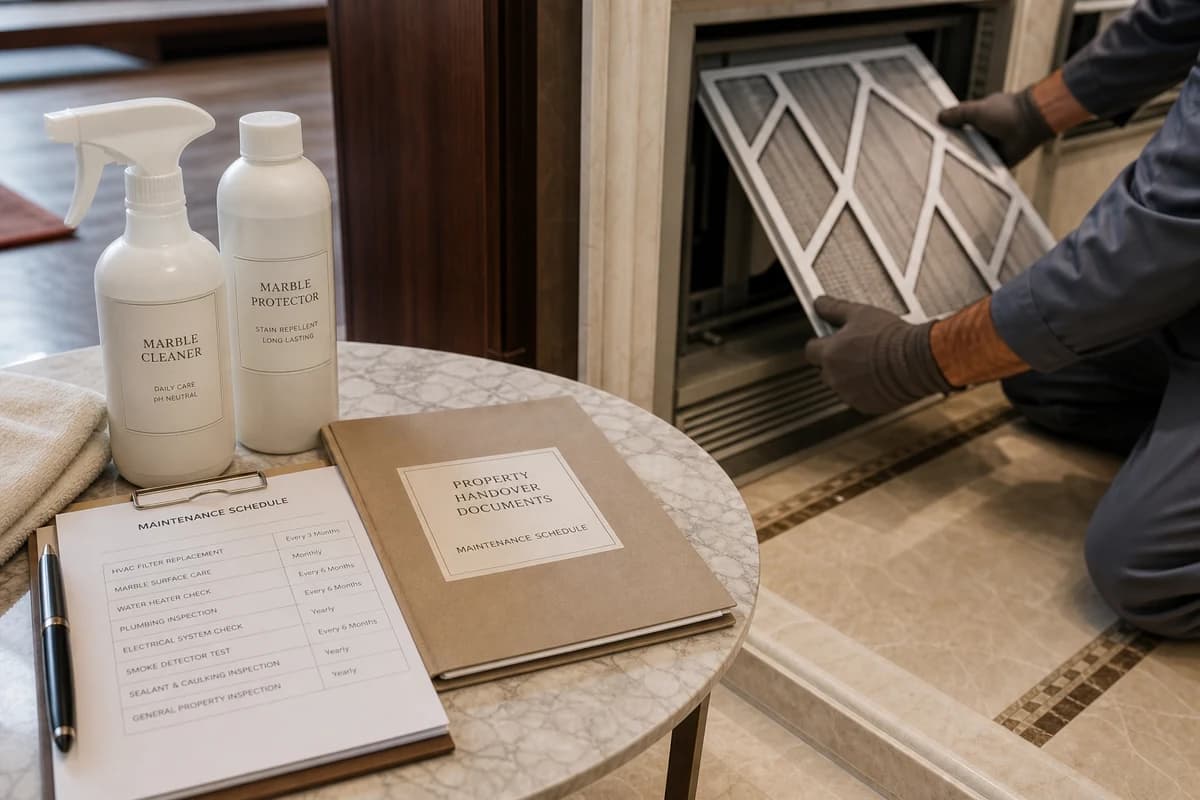
Every property inspection and completed preventive maintenance visit should add to a running log — date, zones checked, actions taken, parts replaced, and follow-up dates. That record supports resale conversations, family handovers, and warranty claims years later.
Store supplier contacts from property handover alongside your maintenance log. When a vanity pump or HVAC component needs replacement, matching the original specification matters for fit and finish alignment.
WhatsApp photo updates work for informal owners; retained property services should still deliver structured summaries diaspora stakeholders can archive. Consistency beats volume — a concise monthly report beats sporadic image dumps without context.
When to engage HYMRO property services
Engage structured property services when occupancy patterns, finish level, or distance make informal care unreliable — especially after major renovation or new-build handover on villas and apartments with stone, bespoke joinery, and integrated MEP.
HYMRO property services combine inspection, preventive maintenance, and coordinated repairs with the same trade discipline applied on construction programmes. For owners building from abroad, the overseas-syrians page outlines how remote reporting aligns with on-site care between visits.
Share your property location, occupancy pattern, last handover date, and any known issues when you enquire — that allows a relevant maintenance proposal rather than a generic annual figure.