

Choosing a construction company in Damascus starts with project type
A construction company in Damascus is not one interchangeable label. Residential programmes — villa restoration, apartment fit-out, phased family homes — demand sequencing around occupied buildings, neighbour interfaces, and finish-heavy handover. Commercial programmes — offices, retail, mixed-use plates — add landlord approvals, after-hours access, fire and MEP loads, and opening-date pressure that residential contractors sometimes underestimate.
Owners who shortlist partners from headline quotes alone often discover the mismatch mid-programme: a residential-led team on a commercial slab, or a fast commercial fit-out crew on a heritage villa where substrate preparation cannot be rushed. The decision is not only who can build, but who has delivered your project type recently with documented construction management.
This guide treats residential and commercial vetting as two paths that reunite at the same control points — scope of work, site supervision, milestone reporting, and project handover — so you can compare proposals on equal terms before appointing a partner in Damascus.
Residential projects: what to verify before you appoint
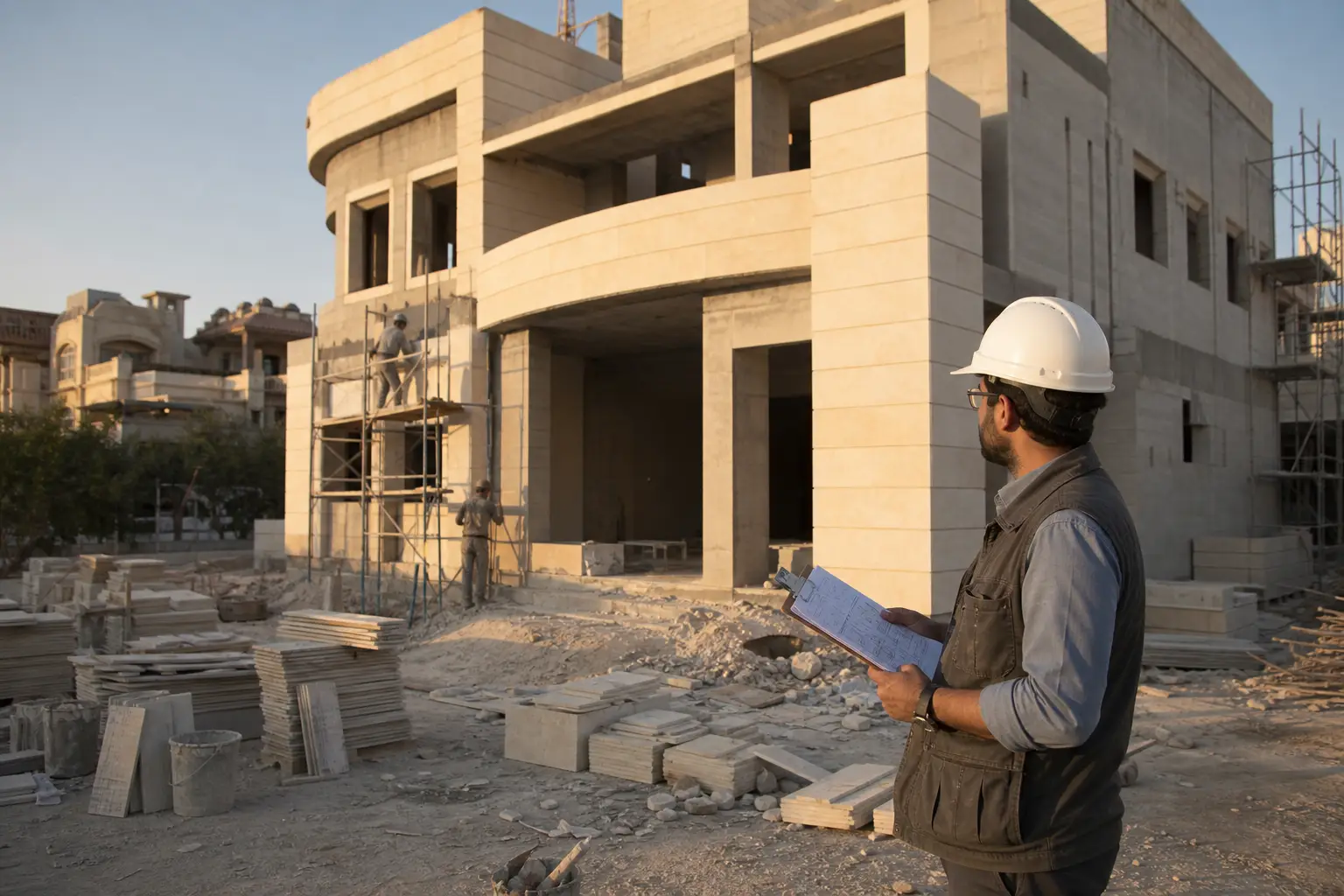
Residential selection should start with property type, not portfolio size. A partner strong on tower apartment finishing may be weak on villa envelope restoration; a heritage specialist may lack commercial MEP coordination if your brief later expands. Ask for three Damascus references within the last eighteen months that match your scale — occupied-building renovation, full villa fit-out, or new-build family home — and request contact details, not only photographs.
Residential scope hides cost inside allowances: stone grades, joinery packages, sanitaryware brands, and MEP plant. A credible construction company Damascus owners trust specifies those lines before pricing, ties deposits to measurable mobilisation, and explains how variations are priced when walls are opened and conditions change.
Walk the property with each shortlisted partner. Note whether they identify moisture paths, slab deflection, riser constraints, or acoustic weaknesses without prompting. That survey quality predicts supervision quality once trades mobilise.
Commercial projects: different risks, same discipline
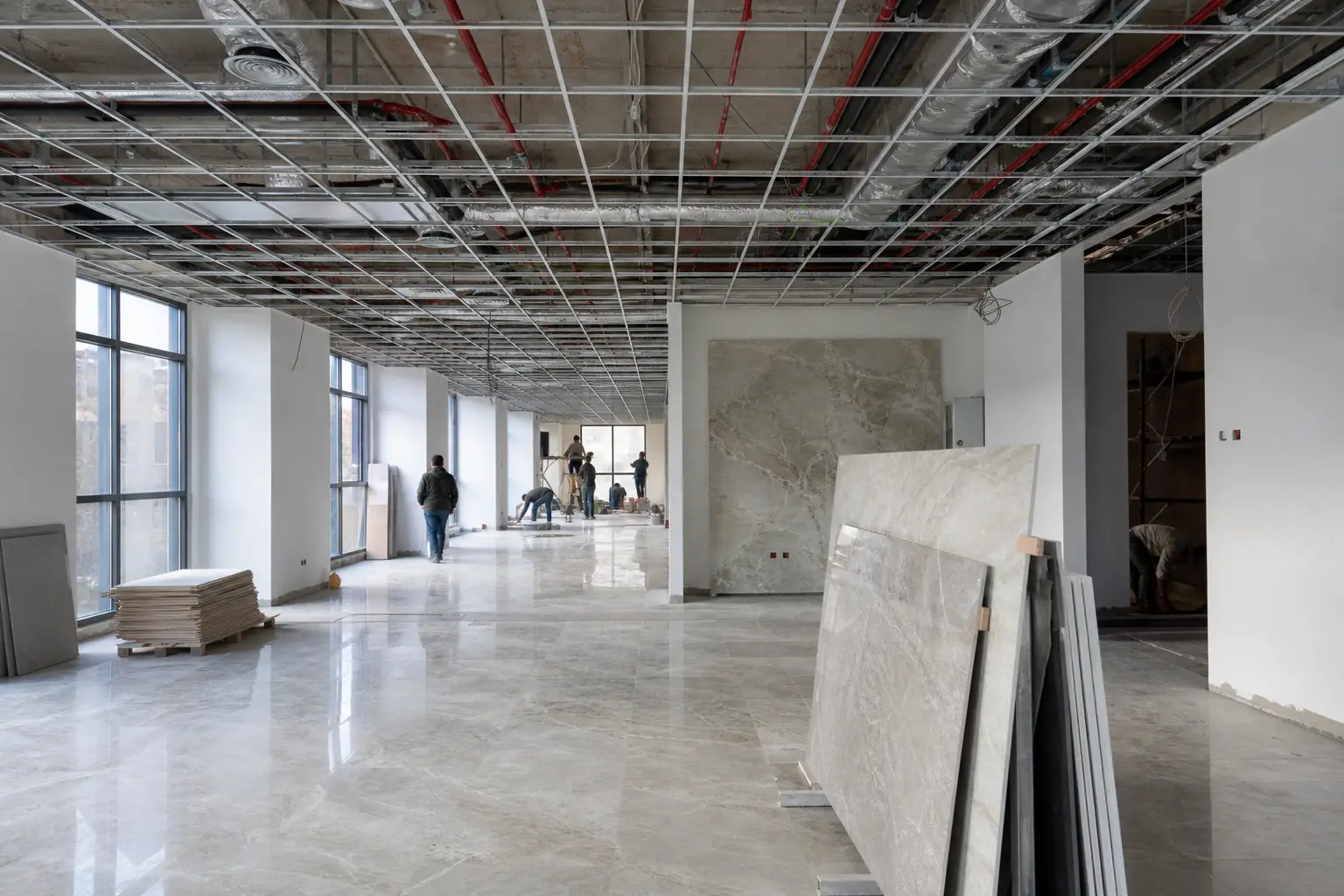
Commercial selection adds landlord interfaces, ceiling void coordination, access hours, and commissioning evidence that residential-only contractors may omit from proposals. Ask whether the construction company has delivered retail or office fit-out locally, how after-hours deliveries are staged, and who holds the relationship with building management during noisy or dusty phases.
MEP density separates commercial outcomes. Confirm load calculations, fire-stopping approach, HVAC balancing responsibility, and who signs commissioning records before practical completion. A lower fit-out quote that excludes testing or landlord inspections often becomes expensive rework when opening dates slip.
If your brief blends commercial ground floor with residential upper levels — common on mixed-use plates in Damascus — insist one team owns the commercial construction and residential interfaces rather than subcontracting between unrelated leads without a single programme owner.
Use the scope of work to compare proposals fairly
The scope of work is your comparison engine. Before you rank prices, align inclusions: structure, demolition, MEP packages, finish grades, external works, furniture supply, cleaning, snag resolution, and handover documentation. Two proposals with different bathroom counts, stone allowances, or supervision hours are not comparable until those lines match.
Strong scope documents pair drawings or marked surveys with milestone definitions — first-fix inspected, ceilings closed, second fix approved, systems tested. Each milestone should be measurable so construction management reporting has something to photograph and sign against.
Owners comparing a construction company in Damascus with an independent programme lead should read the contractor vs project manager guide alongside this checklist. The question is not whether supervision exists on paper, but whether scope, approvals, and handover stay visible when the contractor also prices the work.
Construction management and site supervision as selection signals
Construction management quality shows early. Ask shortlisted partners for a sample weekly report, variation log, and snag register from a completed programme — redacted if needed. Vague promises of WhatsApp updates without hold points are a warning sign on programmes longer than twelve weeks.
Site supervision should be named, not generic. Who attends daily? Who can stop work when sequencing breaks? How are first-fix MEP inspections recorded before plaster commits layouts? Supervisors who only appear for client visits do not protect scope when trades overlap on busy sites.
For owners abroad, confirm reporting language, approval turnaround, and video walkthroughs at milestones. The overseas Syrians page outlines how HYMRO structures remote approvals; use it as a benchmark when testing whether a construction company can support diaspora decision-making without informal gaps.
Milestone payments and project handover before you sign

Payment structure reveals commercial honesty. Milestone tranches should map to measurable progress — not large upfront deposits disconnected from mobilisation evidence. Align invoices with site photos, inspection sign-offs, and agreed variation procedures before funds release.
Project handover is where weak partners exit quietly. Expect a snag list with owners and dates, as-built MEP notes, warranty contacts, commissioning records on commercial work, and care guidance for stone, timber, and mechanical systems. Practical completion without a closed or scheduled snag list transfers risk to the owner on day one.
Residential owners should confirm defects-period process in writing. Commercial tenants and landlords often need separate sign-off packs — test whether your shortlisted construction company has delivered both without collapsing handover into a single informal walkthrough.
How to verify a Damascus construction company if you cannot visit
Owners abroad cannot walk three sites in a week. Remote due diligence still works if you refuse informal WhatsApp-only promises. Ask each shortlisted partner for a written scope template, a redacted weekly report, a variation log, and a snag register from a completed Damascus programme of similar type. Video walkthroughs of a live site beat portfolio stills.
Require one named bilingual lead, a weekday reporting cadence, and payment gates tied to labelled photo evidence — not a large upfront deposit disconnected from mobilisation. Confirm who may approve changes if relatives are on site. Use the same checklist whether you live in the Gulf, Europe, or North America.
When you are ready to test HYMRO against that bar, start on Overseas Syrians for the remote model, then request a quote with photos, location, and a budget band. A scoped brief beats a generic estimate sent from abroad.
A practical shortlist workflow for Damascus owners
Step 1 — Define project type and non-negotiables: residential or commercial, occupied or vacant, target timeline, and finish tier. Step 2 — Issue a brief scope template so every candidate prices the same lines. Step 3 — Site survey with top three partners; eliminate anyone who skips substrate or MEP reality. Step 4 — Compare supervision terms, reporting samples, and handover documentation — not only totals.
Step 5 — Validate references in Damascus for programmes similar to yours. Step 6 — Align milestone payments and variation rules in writing before deposit. For location-specific neighbourhood context, cross-read the construction company Damascus location guide — it complements this project-management lens without replacing it.
When you are ready to appoint, contact HYMRO with your property type, scope summary, and timeline. A scoped conversation beats a generic estimate — especially when residential and commercial interfaces sit in one programme.