

How should you plan villa renovation in Damascus before site work starts?
Villa renovation in Damascus succeeds when you plan space, materials, procurement, and delivery hold points before demolition — not when you choose marble first. A villa carries arrival sequences, guest privacy, service routes, garden interfaces, and long-term care of stone, timber, and mechanical systems that a single finish catalogue cannot resolve.
Owners need a written plan that connects how the renovated villa should work with who approves each package and when. Without that discipline, a premium home renovation becomes a chain of expensive reactions once walls open.
This guide is deliberately villa-specific. It does not repeat an apartment fit-out checklist or the general renovation company service overview. It focuses on planning choices — space, materials, procurement, and delivery hold points — before premium site work begins on a large Damascus villa.
How do you map the villa around family, guests, and service movement?
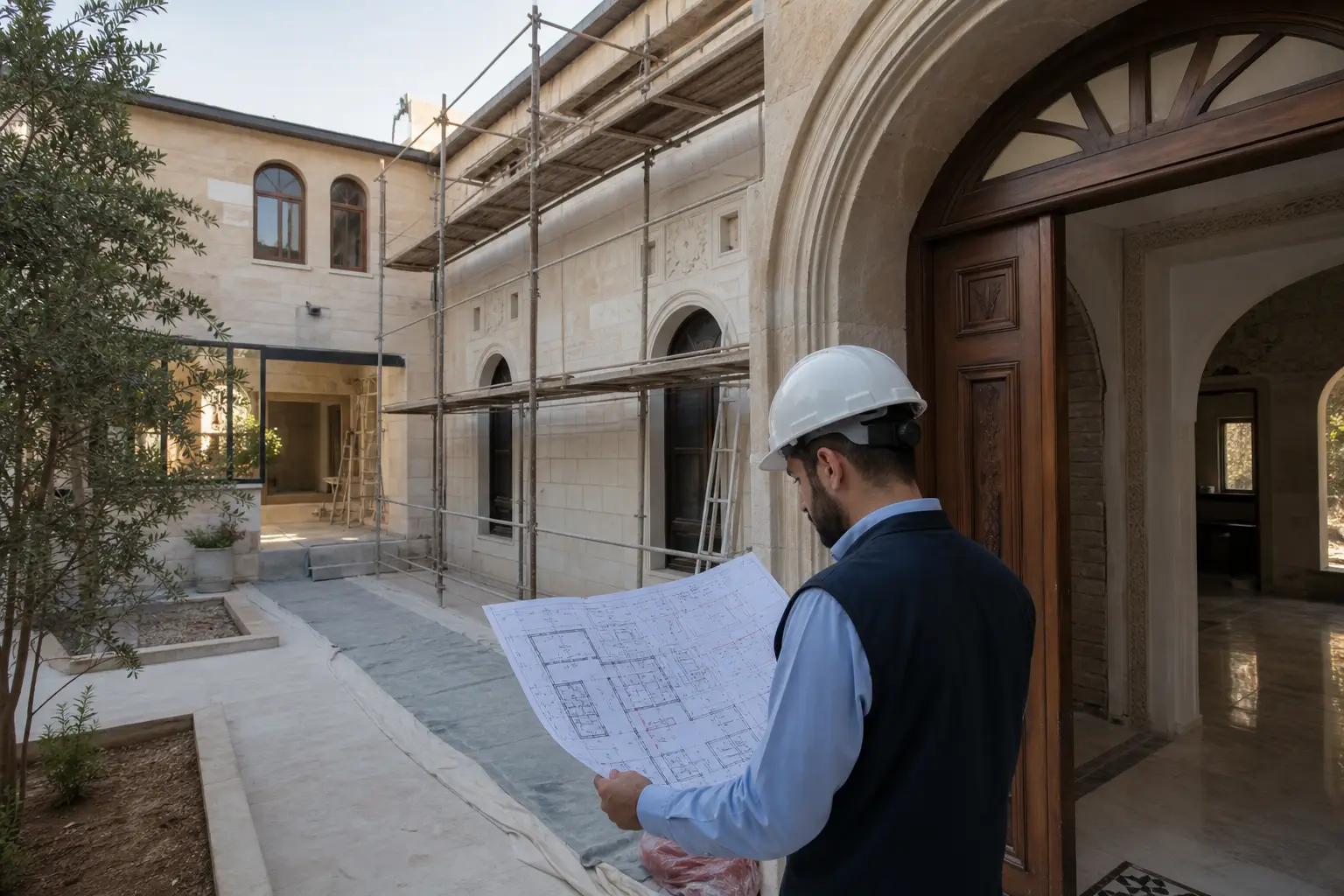
A villa brief should begin with how people move through the property. Public reception spaces, private family rooms, kitchens, outdoor terraces, guest suites, and service zones each need different acoustic, lighting, storage, and privacy assumptions. If those relationships are not mapped early, finishes may look polished while the daily use of the house remains awkward.
Damascus villas often include courtyards, arched openings, mature planting, and generous reception rooms that deserve careful sequencing. Protecting the character of those spaces can matter as much as changing them. Before drawings are frozen, test whether new doors, HVAC routes, bathrooms, and storage runs support the villa's social pattern rather than cutting through it.
Owners comparing a villa renovation with apartment finishing should expect a broader planning phase. The bigger footprint means more interfaces, more procurement decisions, and more inspection points before work reaches the visible layer.
Why set material packages before the quotation becomes final?
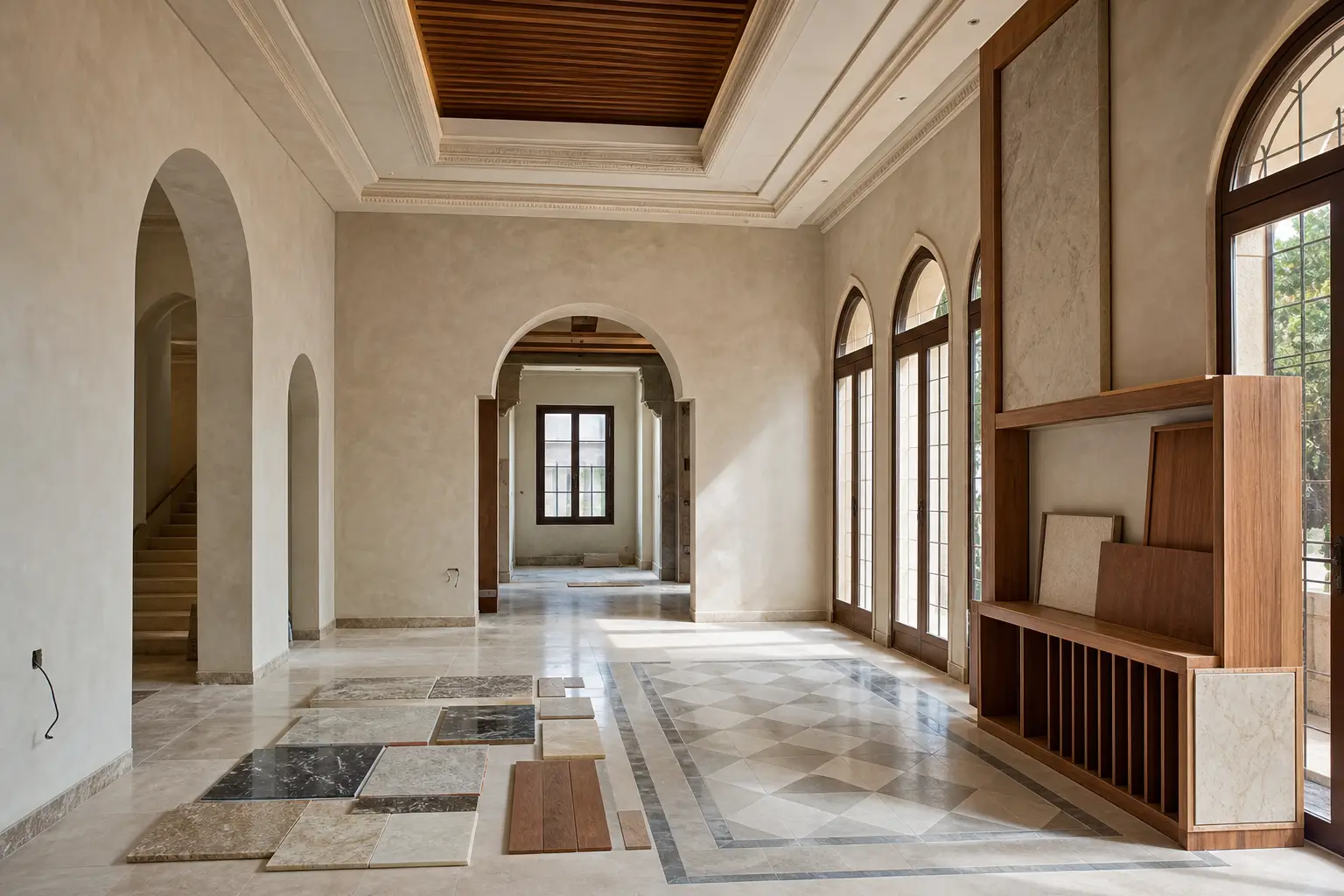
Material planning is where villa budgets become either clear or fragile. Stone flooring, staircase details, exterior paving, timber doors, wardrobe systems, kitchen joinery, sanitaryware, lighting, and metalwork should be grouped into packages with allowance levels and approval dates. A single line for luxury finishes is not enough for a villa-scale scope.
A credible renovation contractor should show how each material package affects lead time, installation sequence, and maintenance. Imported fixtures may require earlier confirmation; local stone may need slab selection and edge-profile approval; timber tones should be tested against flooring and wall colour in the actual light of the villa.
For diaspora owners, package approvals are especially useful. Reviewing flooring, joinery, bathroom, and lighting decisions as coordinated sets reduces scattered WhatsApp decisions and gives the site team fewer reasons to pause mid-programme.
How do planning hold points protect villa delivery?
Large villas need decision gates. Before demolition, confirm survey findings, protection methods, structural assumptions, and the first procurement list. Before MEP close-up, approve service routes, equipment locations, drainage falls, and reflected ceiling coordination. Before finishes, sign off sample panels, mock-up corners, and room-by-room material schedules.
These hold points give the renovation company permission to move with confidence. They also protect the owner from hidden variation costs, because each phase has a written checkpoint before the next layer conceals it. When the brief includes gardens, terraces, pools, or guest annexes, the same discipline should extend outside the main building.
The goal is not paperwork for its own sake. The goal is fewer reversals once premium stone, bespoke joinery, or specialist lighting has been ordered and installed.
What should a renovation contractor coordinate at villa scale?
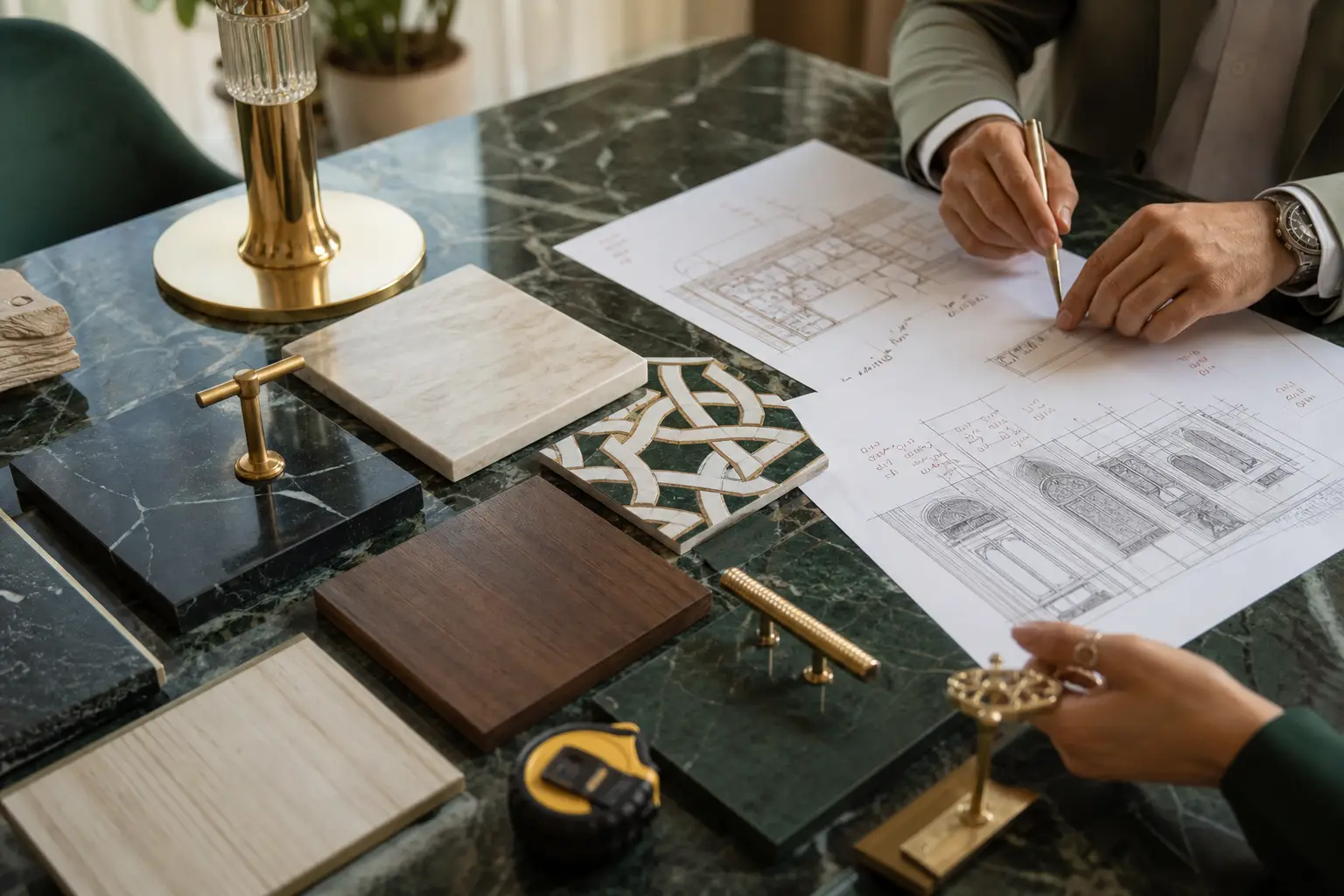
A villa renovation contractor has to coordinate more than trades. They must protect occupied or neighbouring areas, manage access for larger material deliveries, sequence noisy work, and keep exterior, interior, and services teams aligned. That requires a site lead who understands the whole house, not only the room currently being finished.
Ask how drawings are controlled, how substitutions are approved, and how snags are recorded by zone. On villa projects, small mismatches repeat across many rooms: door hardware, skirting profiles, lighting temperatures, stone thresholds, and joinery handles. A disciplined contractor catches those patterns before they spread.
HYMRO's work across luxury renovations and residential projects — including the standard shown in the Damascus villa restoration case study — is built around that supervision model: scoped decisions, milestone reporting, and practical handover rather than a loose collection of subcontractor tasks.
Villa renovation process checklist: survey to handover
Survey stage — walk envelope, slabs, drainage, MEP capacity, delivery access, and neighbour interfaces; issue a written baseline before demolition exposes hidden conditions.
Space and brief stage — map family, guest, and service circulation; freeze which rooms change, which character to protect, and who approves each zone from abroad or on site.
MEP and wet-room stage — approve service routes, equipment locations, waterproofing build-ups, and drainage falls; photograph first-fix and wet-area hold points before stone or cabinetry locks rooms.
Material package stage — group stone, timber, sanitaryware, lighting, and metalwork into allowance packs with approval dates; test tones in the villa's actual light.
Finishes stage — install floors, joinery, bathrooms, and lighting only after samples and mock-up corners are signed; snag by zone as rooms close, not only at the end.
Exterior and interface stage — sequence terraces, paving, and garden edges with the same hold points used inside when the brief includes outdoor works.
Handover stage — zone-by-zone snagging, electrical and mechanical tests, water-pressure and drainage checks, exterior inspection after cleaning, and a care pack with supplier contacts and outstanding defect dates.
Ready to plan your Damascus villa renovation with HYMRO?
When you brief HYMRO for luxury renovations, share the villa location, current condition, intended use, major spaces to change, finish expectations, and whether you need remote reporting. That keeps the first conversation on planning, procurement, and delivery control rather than a generic home renovation estimate.
Owners abroad can review approval rhythm on the overseas Syrians page, then start through contact with photos and a short brief so milestone reporting begins from the first reply.