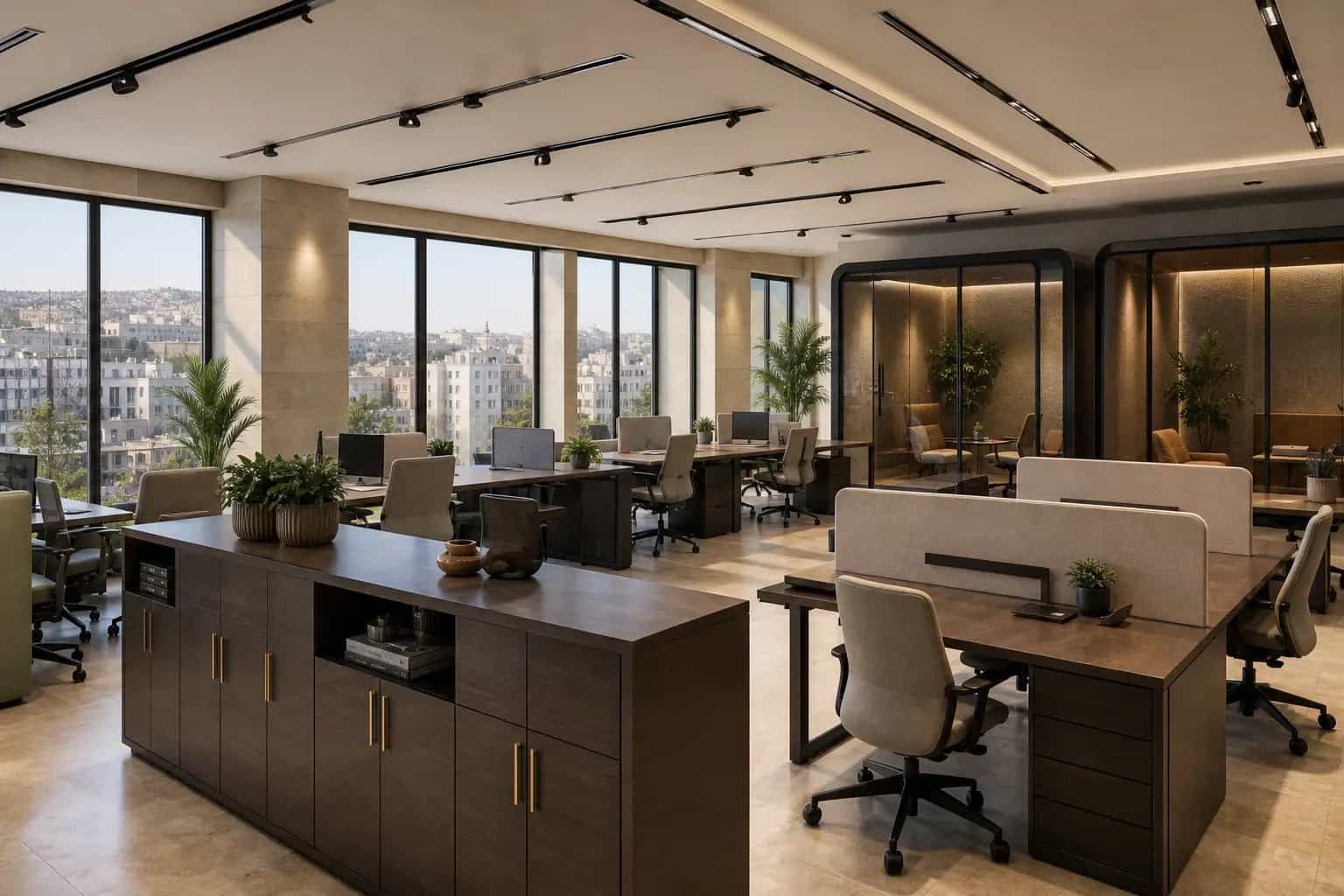

Office interior design Damascus teams should judge by performance
Office interior design in Damascus is often judged too early by the render: the desk finish, the reception wall, the colour of the meeting room chairs. Those choices matter, but they do not prove that the office will support focused work, client meetings, future headcount, or daily operations once the space is full.
A stronger brief starts with performance. Can teams move without interrupting each other? Are meeting rooms private enough? Does the lighting support long working days? Can MEP, data, and HVAC keep pace with the way the business actually runs? These decisions shape the value of the office long after the first photographs are taken.
This guide is intentionally different from a shell-to-handover office fit-out checklist or a front-of-house reception guide. It focuses on seven design decisions that sit between business strategy and site execution, helping owners, tenants, and facility leads brief HYMRO before drawings, budgets, and contractor packages become fixed.
Decision 1: map workflow before drawing the beautiful plan
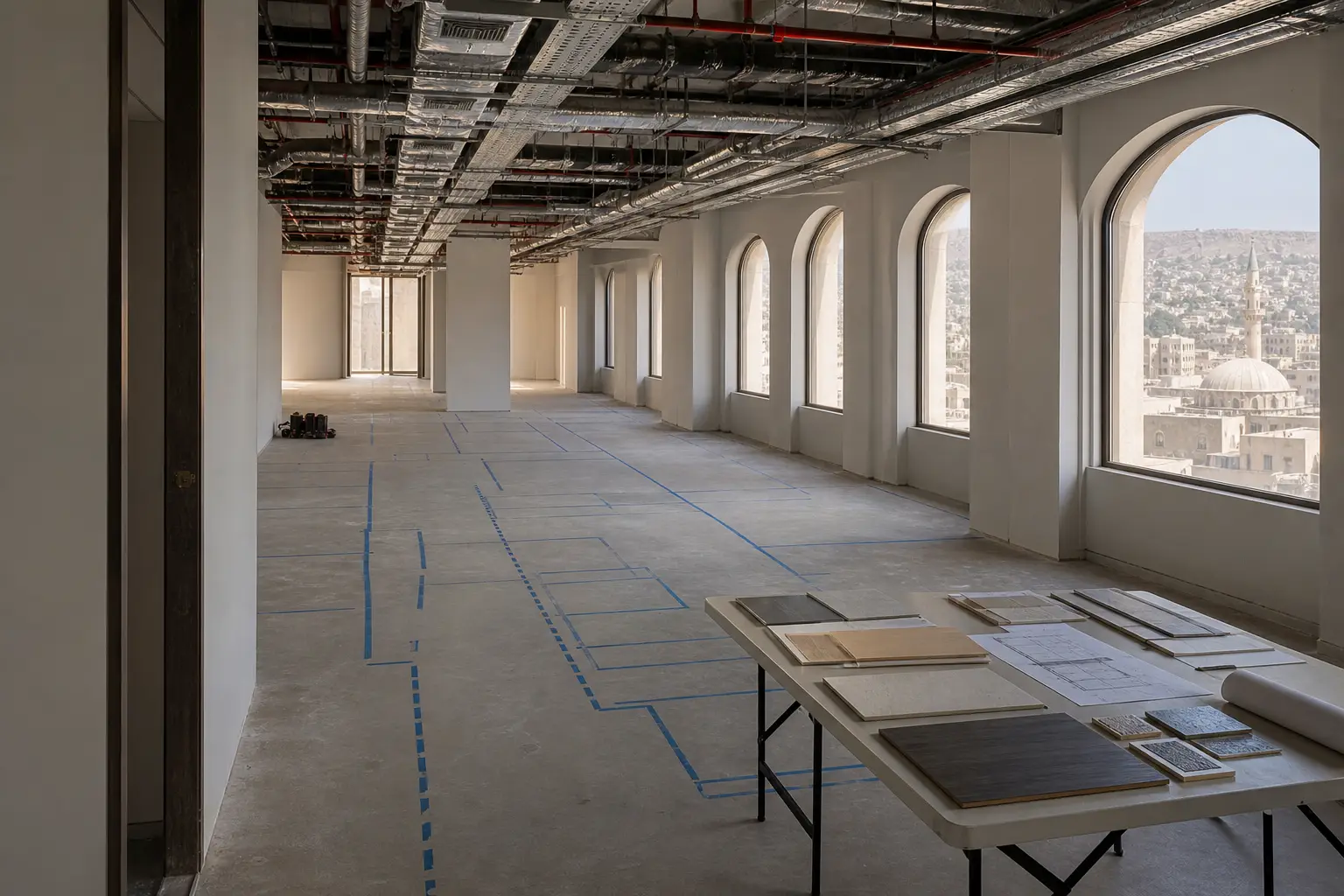
The first performance decision is not style; it is movement. Map how staff arrive, where teams collaborate, which roles need quiet, how visitors reach meeting rooms, and where deliveries, files, refreshments, and private conversations happen. A plan that photographs well but forces constant cross-traffic will feel inefficient within weeks.
Damascus offices often sit inside existing floor plates with columns, service risers, lift lobbies, or windows that cannot move. Instead of fighting those constraints, use them to define sensible zones: public arrival, shared collaboration, focused work, enclosed decision rooms, and support spaces. The office should reduce friction rather than make staff adapt to a decorative diagram.
When the programme is part of a wider office fit-out, this workflow map should be agreed before partitions, ceiling grids, and floor boxes are priced. Late changes to movement patterns usually trigger expensive MEP and furniture revisions.
Decision 2: separate collaboration from concentration
Open-plan office interiors can support fast communication, but they rarely solve every type of work. If your team handles finance, legal review, design coordination, sales calls, or senior decision-making, the plan needs spaces where concentration and confidentiality are protected without making people feel isolated.
A practical mix may include open desks, two-person focus rooms, phone booths, informal project tables, and enclosed meeting rooms. The ratio should follow the real work pattern, not an imported headquarters template. Too many enclosed rooms waste area; too few make the main workspace loud and tense.
This decision also affects management behaviour. If people have nowhere to step aside for calls, they will create their own workarounds in corridors, lounges, or stair lobbies. Good office interior design prevents those informal failures before they become daily habits.
Decision 3: treat acoustics as a construction item
Acoustics are often discussed after complaints begin, but by then the visible office may already be complete. Ceiling absorption, partition build-up, door seals, glazing specification, and background mechanical noise should be considered while the office fit-out package is still being scoped.
Meeting rooms need more than glass walls. They need privacy targets, sealed edges, careful return-air paths, and furniture layouts that keep speakers away from weak points. Open areas need acoustic ceilings, soft finishes, and enough distance between noisy collaboration points and focused desks.
The commercial contractor should be able to explain how acoustic details will be built, inspected, and protected during sequencing. A specification that looks good on paper but is cut around services without review will not perform on handover day.
Decision 4: design lighting for work, not only atmosphere
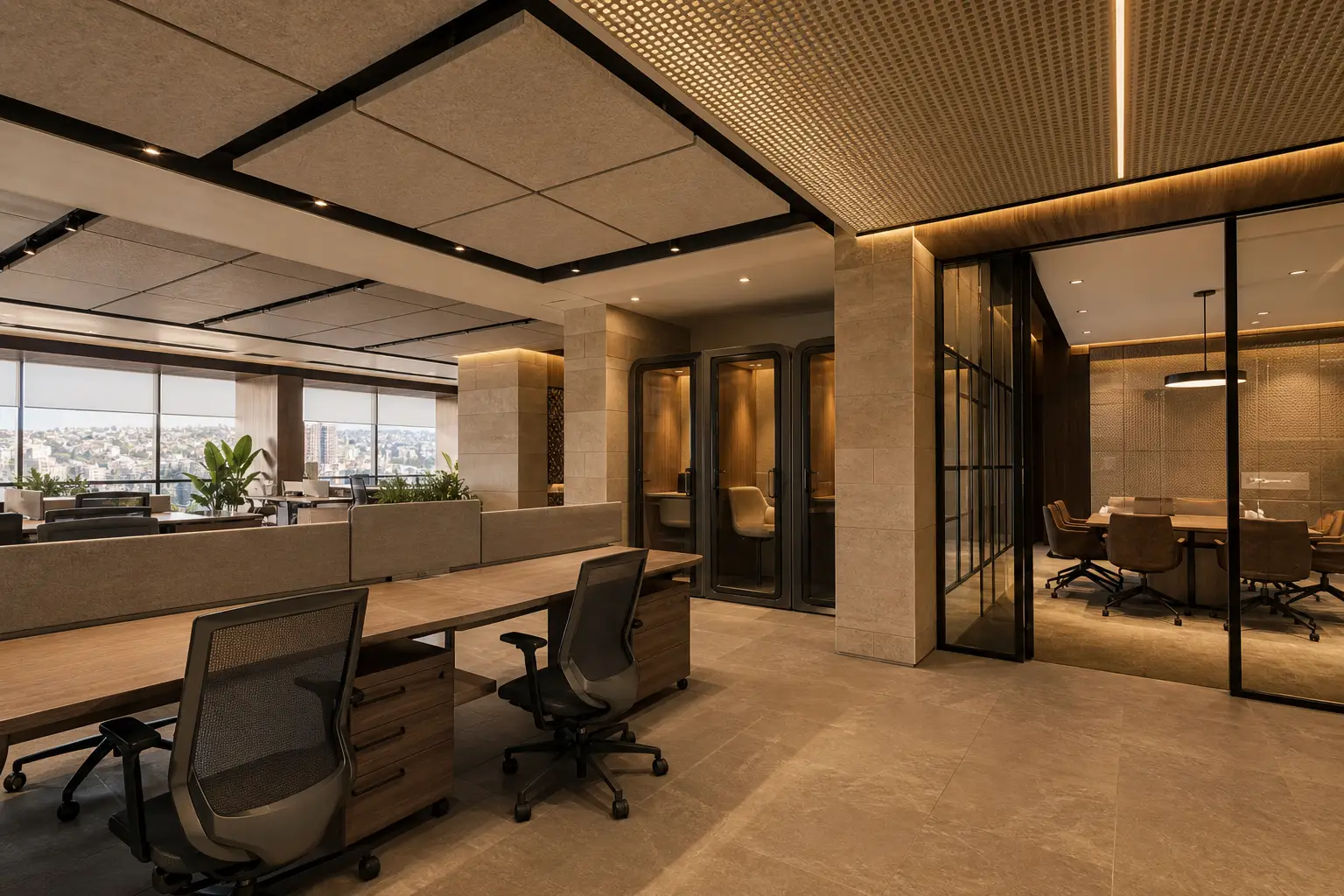
Lighting shapes productivity, energy, and perceived quality. Damascus offices with strong daylight need glare control and task lighting, while deeper floor plates may need layered artificial light so desks, meeting rooms, and circulation routes do not feel flat or uneven.
Avoid treating feature lighting as the whole lighting strategy. Decorative pendants, wall washers, and warm cove lighting can support the brand, but workstations need comfortable illumination, meeting rooms need faces to read clearly on calls, and circulation needs consistent wayfinding after dark.
The lighting decision should be coordinated with ceiling services, HVAC diffusers, sprinklers where present, access panels, and acoustic panels. When those items compete late, the ceiling becomes visually cluttered and technically compromised.
Decision 5: make MEP and technology part of the interior brief
Office performance depends on services that are mostly hidden. Power density, data routes, Wi-Fi coverage, meeting-room AV, HVAC zoning, fresh air, and maintenance access all affect how the space works after opening. If these are treated as technical leftovers, the design will carry the weakness.
Start by listing the operating assumptions: number of desks, laptop versus desktop use, future headcount, call-room needs, server or network storage, security access, and any showroom or retail fit-out area inside the same lease. Commercial spaces that combine office and client-facing functions often need different loads and access patterns in each zone.
A good design package lets MEP engineers and interior designers resolve these decisions together. It also gives the commercial contractor fewer excuses for visible trunking, blocked access panels, or awkward furniture changes during installation.
Decision 6: choose materials for maintenance as well as mood
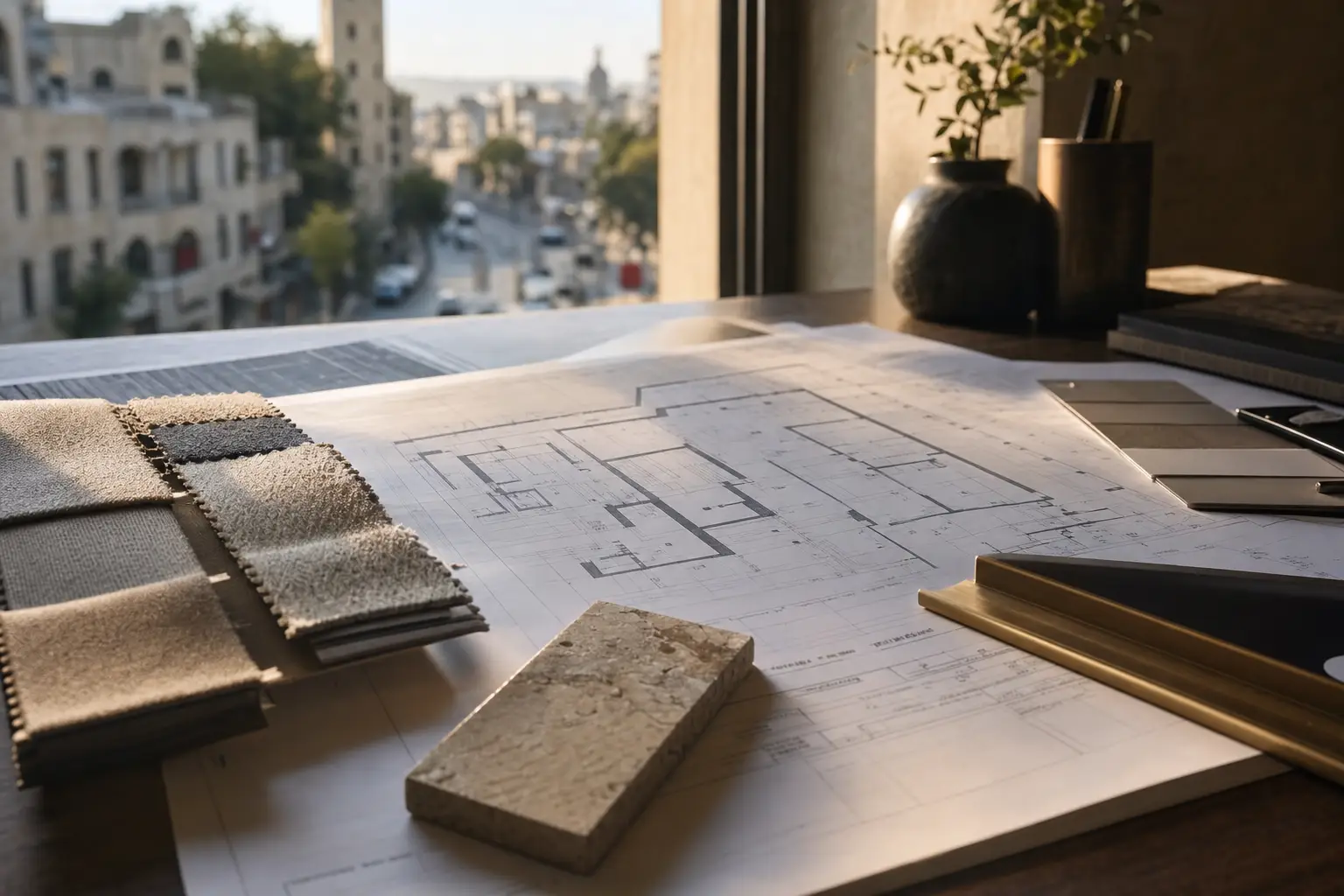
Premium office interiors in Damascus should feel composed, but durability decides whether they stay that way. Floors near entries, pantry zones, corridor corners, chair routes, and meeting-room thresholds take heavier wear than presentation images suggest. Select finishes with cleaning, repair, and replacement in mind.
Material samples should be reviewed under the office's actual light, not only in a supplier showroom. Stone, veneer, fabric, metal trim, and acoustic panels can shift colour between daylight and warm evening light. Mock-up corners are especially useful when brand colours, executive zones, or client-facing rooms are involved.
Maintenance thinking should not make the design plain. It should make the investment more resilient. A finish palette that can be cleaned, matched, and repaired will usually look more premium after a year than a fragile one chosen only for first impression.
Decision 7: build flexibility into the first phase
Most offices change faster than their finishes wear out. Teams grow, departments merge, hybrid work policies shift, and client-facing functions expand. Designing for flexibility does not mean leaving the office unfinished; it means deciding where change is likely and avoiding expensive fixed elements in those zones.
Flexible planning may include modular furniture, demountable partitions in selected areas, spare data capacity, adaptable meeting rooms, and support spaces that can change from storage to project work. The goal is not infinite choice. It is a practical path for the next stage without reopening the entire floor.
If a future retail fit-out, showroom, or training suite may be added, protect MEP capacity and circulation options now. The cost of small allowances during the first phase is usually lower than reworking finished ceilings, floors, and joinery later.
How to turn design decisions into a controlled project
The seven decisions only create value when they are translated into scope, drawings, allowances, and hold points. Before appointing a commercial contractor, align the design brief with budget priorities: which zones must feel premium, which systems are non-negotiable, where phased delivery is acceptable, and what evidence is required before each payment milestone.
HYMRO's office fit-outs service can connect these design decisions to site sequencing, while the commercial construction service is relevant when the scope includes structural adjustments, landlord interfaces, or public-facing commercial zones. The executive office suite case study is a useful reference for how workplace detail, finishes, and supervision come together in a finished commercial interior.
When you are ready to brief HYMRO, share the floor plan, target headcount, current site condition, preferred work style, client-facing needs, and any constraints from the landlord or building. That lets the first conversation focus on performance, not generic decoration.
For shell-to-handover delivery, see office fit-out in Damascus and office reception design for front-of-house scope. Contact HYMRO with your brief; the delivery process and overseas Syrians pages cover remote approval and milestone reporting for diaspora-led programmes.