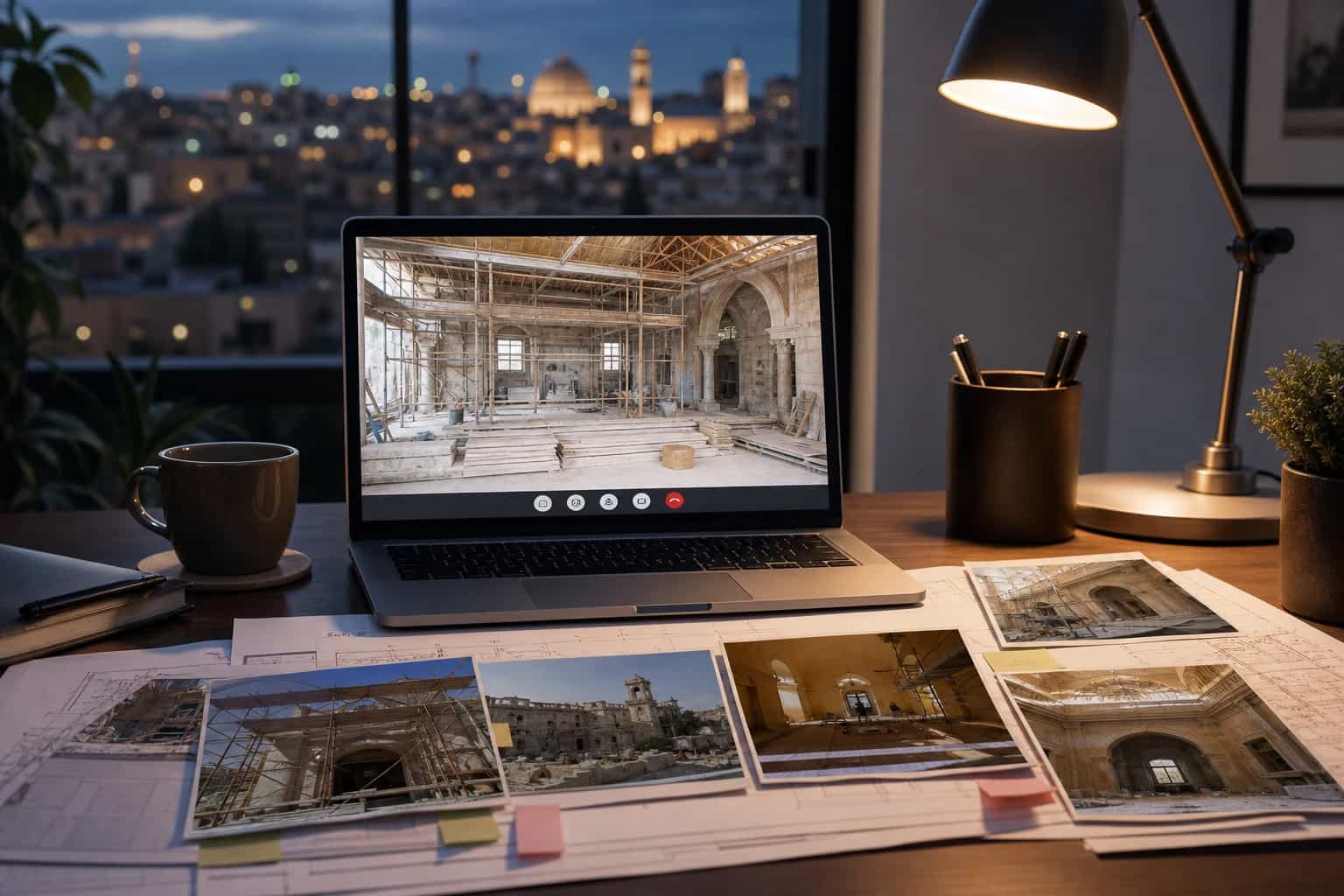

Why are construction photo and video reports not casual snaps?
An owner reviewing diaspora construction from Dubai, Berlin, or Amman cannot walk the site at lunchtime. What arrives on WhatsApp instead often looks like progress — a bright corner, a tidy stack of materials, a smiling trade — without proving that the right stage is complete. Clear visibility from abroad starts when media is treated as evidence, not as social content.
Construction photo video reports Syria programmes should answer three questions every week: what changed, where it sits on the programme, and what decision is required next. Without labels, dates, and hold-point intent, remote project management becomes a stream of images that feel reassuring and still leave the owner guessing.
This guide focuses on the media layer. For the wider weekly report structure around risks, variations, and payments, see HYMRO's remote construction management playbook — then use the standards below so photos and video actually carry the proof.
How do photo packs prove progress by zone, not by mood?
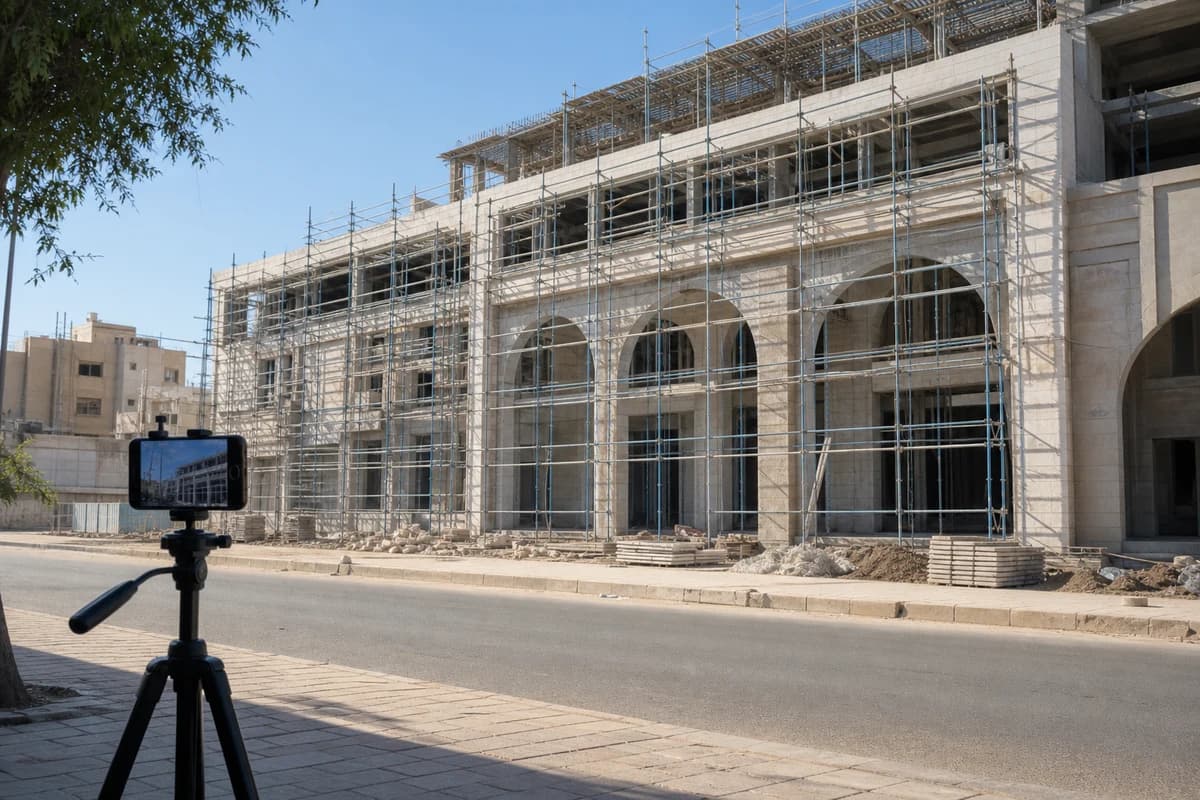
A useful photo pack repeats the same viewpoints across weeks: entrance, main rooms, wet rooms, MEP plant, and exterior elevations. Consistency lets you compare Stage 5 last Tuesday with Stage 5 this Tuesday. Random beauty shots of one finished wall hide unfinished work elsewhere.
Each frame needs a location label, date, and stage note — kitchen first-fix, bathroom waterproofing, facade scaffolding removed. Wide shots establish context; close shots prove detail. Both belong in the pack when a property renovation is moving through interfaces that later get covered.
Ask for before-and-after pairs at hold points. One photo of "done" without the prior condition invites optimistic interpretation. Diaspora construction decisions improve when the owner can see the sequence, not only the latest surface.
Can a video walkthrough replace a hurried site visit?
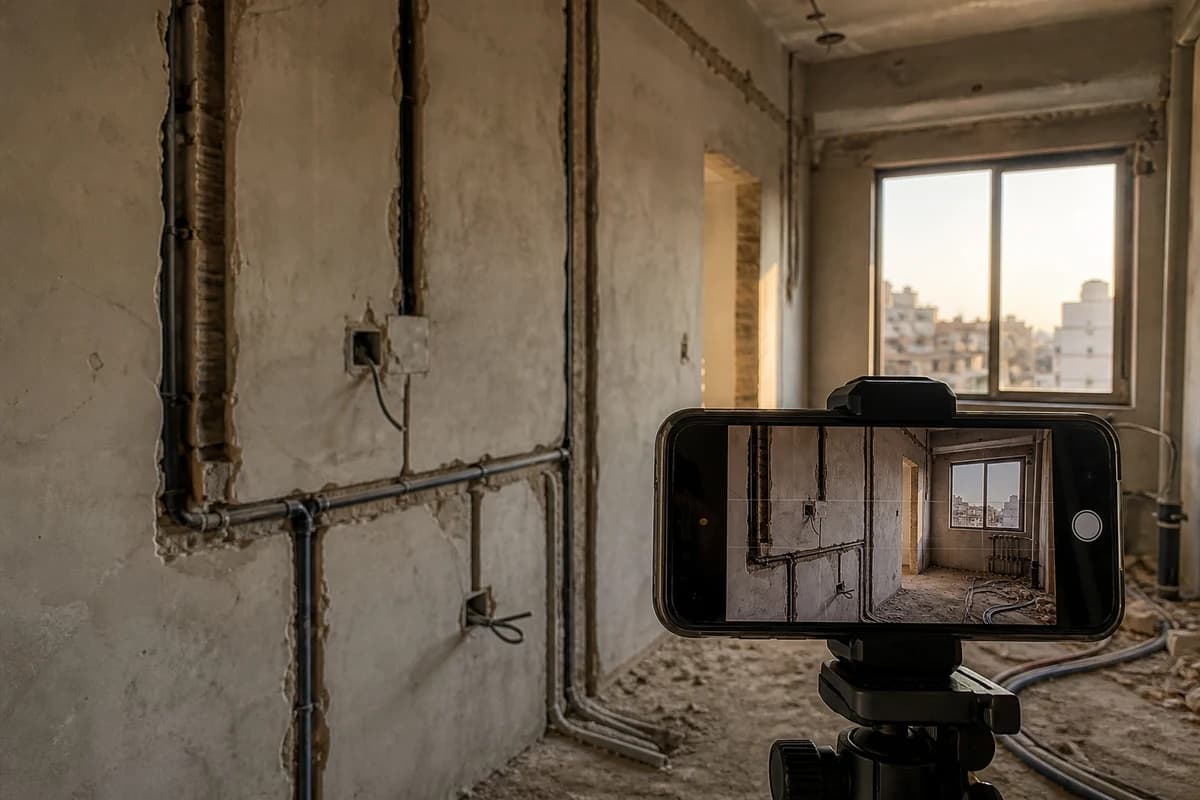
Video is for movement and spatial truth: door swings, floor levels, service routes, and how rooms connect. A two-to-four-minute walkthrough with spoken zone names often reveals more than twenty unlabelled stills. Keep the camera steady, narrate the stage, and pause on defects or open decisions.
Schedule video at hold points — after strip-out, after first-fix inspection, before finishes close, and before handover snagging. Mid-week casual clips are useful only when they answer a specific question the owner raised in writing.
HYMRO uses walkthroughs inside remote project management so overseas stakeholders approve against the same spatial evidence the site team sees that day.
How does remote project management turn media into decisions?
Media without a decision line wastes everyone's evening. Each pack should end with a short list: items for information only, items awaiting owner approval, and items blocked until a trade or delivery clears. Remote project management is the discipline of routing those lines to the right person with a deadline.
Agree one channel for official packs — usually email or a shared folder — and keep WhatsApp for alerts and clarifications. When every image is "official", nothing is. When nothing is filed, milestone disputes become memory contests.
Owners who also need family representatives on the ground can align roles through Overseas Syrians so photo packs do not arrive to three people with three different interpretations.
When do photos and video unlock the next payment stage?
Milestone reports should attach the media that proves the gate: labelled photos of the completed stage, a short video if spatial confirmation matters, and a note of residual snags that are non-blocking. Payment requests without that evidence ask the owner to fund trust, not progress.
Define the media standard before mobilisation. If Stage 5 requires first-fix photos by zone and a walkthrough, say so in the programme. Late arguments about "enough evidence" usually mean the standard was never written.
For property renovation programmes with many finish interfaces, separate progress media from sample-approval media. Mixing them buries the decision the owner must make this week under general site atmosphere.
Which labelling rules keep diaspora construction packs usable?
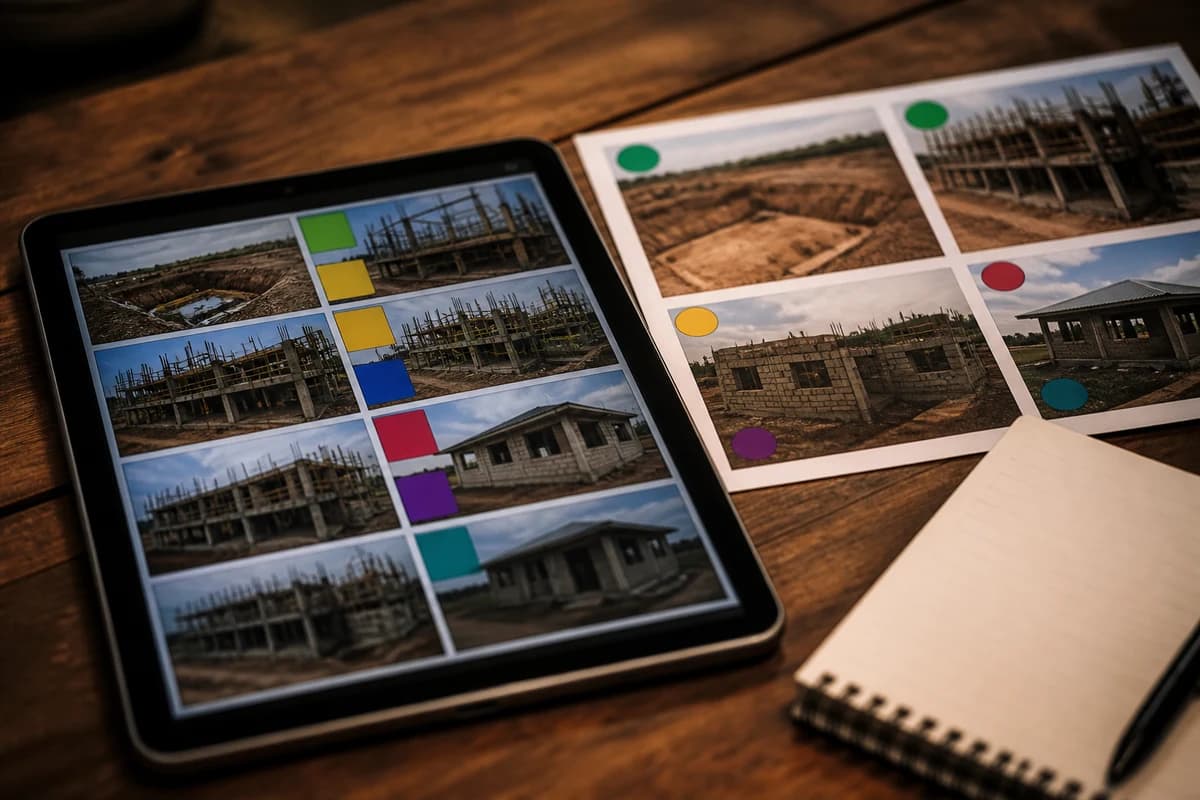
Use a simple naming pattern: date, property, zone, stage — for example 2026-08-05 / Damascus flat / bath-1 / waterproofing. Colour tags or floor-plan markers help when several rooms look similar in photos. Avoid folders named "final2_new".
Compress carefully. Over-compressed images hide cracks and joint quality; oversized files stall remote reviews. Aim for clarity on a phone screen and enough detail to zoom once on a laptop.
Store packs where they survive staff changes: a shared drive linked to the project, not only one supervisor's phone. Diaspora construction often spans months; media must remain findable when snags reopen later.
Which property-renovation hold points are worth filming every time?
Prioritise film and photo evidence for work that disappears: waterproofing, first-fix MEP, insulation, substrate repairs, and steel or timber that later sits behind finishes. Once covered, verbal claims replace proof.
Also capture interfaces between trades — stone thresholds, joinery against plaster, lighting against ceiling grids. Those junctions generate most overseas disputes because they look fine until light and use expose misalignment.
For a sense of how remote-owned residential programmes stay visible through delivery, review the diaspora family residence case study — then ask for the same media discipline on your own brief.
What belongs on a weekly photo and video checklist?
Date, property, and zone on every file. Repeated viewpoints of entrance, wet rooms, MEP, and exterior. Before-and-after pairs at hold points that will be covered. A short walkthrough when spatial truth matters. Open decisions listed in writing. Payment requested only if the matching media is attached.
When should you ask HYMRO for photo and video reporting from day one?
Brief HYMRO when you will not be on site weekly, when several family decision-makers share approvals, or when payments must follow documented gates. Agree the photo viewpoints, video hold points, and filing method before demolition starts — not after the first confusing pack arrives.
Share property type, time zone, preferred review days, and whether you need Arabic, English, or bilingual captions through contact. That keeps the first reporting cycle useful instead of experimental.