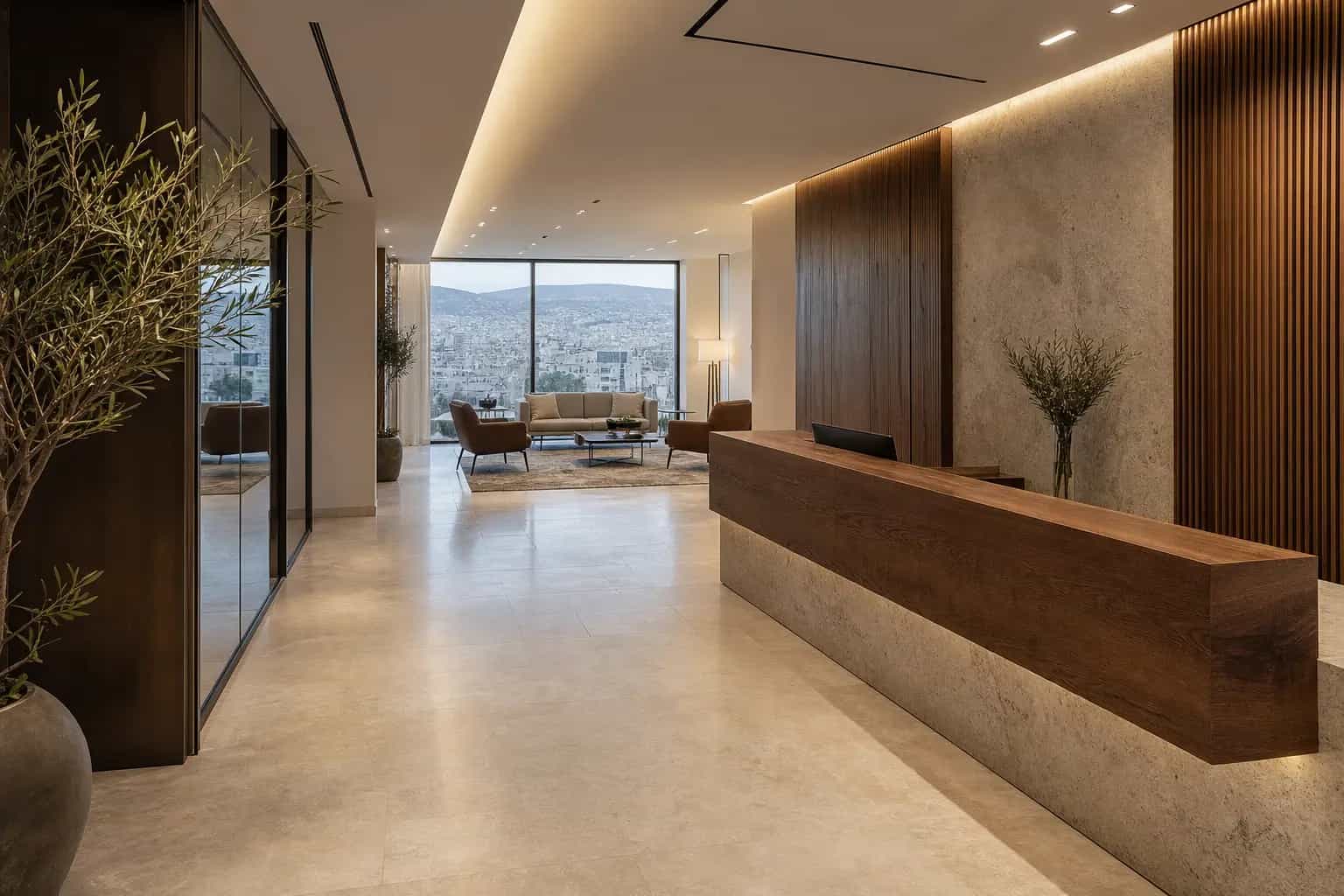
Why the reception sets the tone for the whole office
Office reception design in Damascus carries more weight than a decorative lobby upgrade. For many clients, partners, and prospective hires, the reception is the first physical proof of how a business thinks about quality, organisation, and trust. A weak entrance can make a well-run company feel improvised; a well-planned one can steady the entire office experience before a meeting begins.
The reception also works harder than many teams expect. It must welcome guests, direct movement, hold brief waiting periods, support security and access control, and express the brand without slowing the front-desk workflow. That balance between presence and practicality is where a successful office fit-out usually stands out.
Start with visitor flow before decorative choices
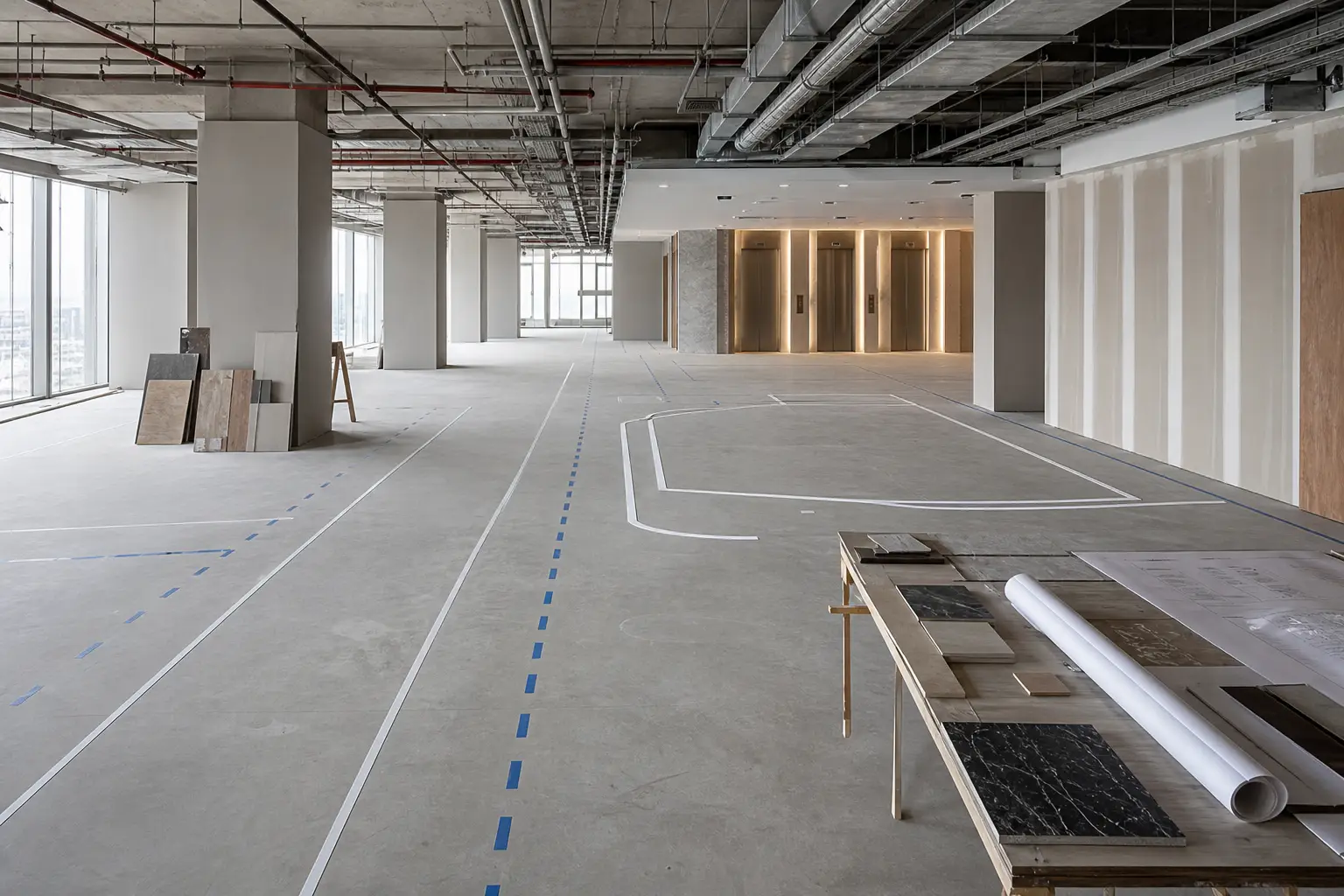
Visitor flow should be drawn before the stone, timber, or signage package is approved. In Damascus offices, reception areas are often constrained by existing lift lobbies, column grids, or landlord base-build conditions, so circulation can fail even when the space looks polished in renders.
Map how a guest arrives, pauses, checks in, sits, moves to meeting rooms, and exits. Separate staff shortcuts from guest routes where possible, and avoid reception desks that force visitors to cross circulation lines just to ask a simple question. The most convincing office interiors feel calm because movement has already been solved.
If the programme sits inside a wider office fit-out, confirm where access control, delivery routes, and back-of-house doors meet the reception zone. Many front-of-house problems begin with a plan that looks elegant but ignores how the wider floor actually operates.
Brand presence without turning the lobby into a showroom
A strong reception should express brand character without reading like a temporary display stand. Material tone, front-desk geometry, wall finishes, feature lighting, and signage scale should work together so the brand is felt in the room rather than shouted from every surface.
For corporate offices in Damascus, that often means prioritising one dominant gesture — a reception desk, a feature wall, or a framed logo backdrop — then supporting it with quieter office interiors that keep the atmosphere composed. Too many competing features can make even premium finishes feel crowded.
This is where comparisons with retail fit-out help. Reception areas borrow some lessons from customer-facing retail spaces, but they still serve a professional waiting and wayfinding function. Brand presence should support trust, not distraction.
Front desk, waiting zone, and privacy lines
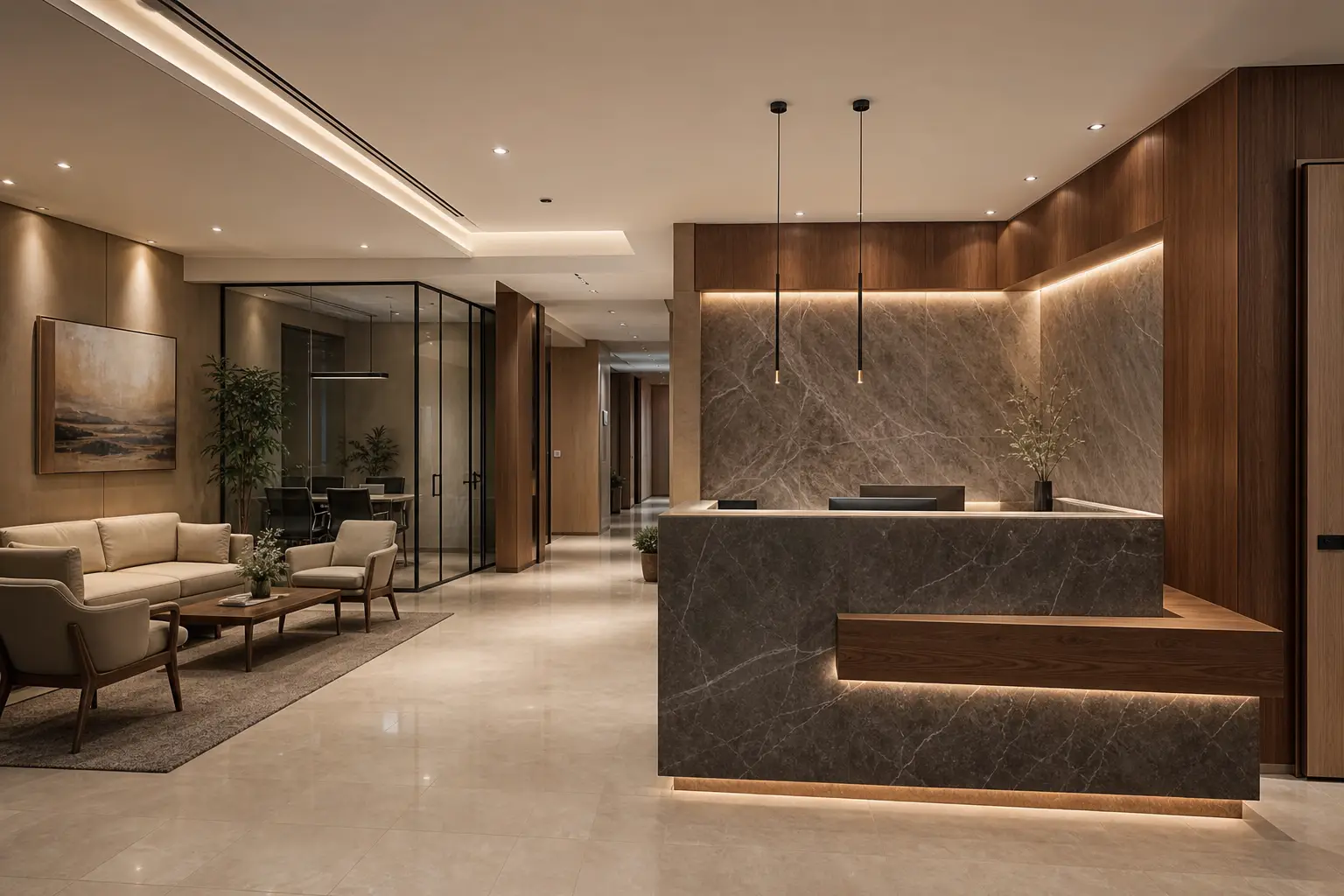
The front desk is both a visual anchor and a working station. Its height, reach, storage, cable routes, and sightlines should support staff through a full day of check-ins, deliveries, and calls. A desk that looks impressive but exposes wires, paperwork, or awkward monitor positions will age badly within weeks.
Waiting areas should be proportioned to actual use, not copied from larger headquarters abroad. In Damascus offices with modest guest numbers, a compact seating zone with clear sightlines can feel more premium than a crowded lobby trying to imitate a hotel. If confidential meetings happen nearby, consider how acoustic privacy and direct views are controlled from the moment a guest enters.
Meeting-room doors, guest washrooms, and circulation to executive spaces should feel legible from reception without exposing sensitive zones. The best visitor experience is intuitive, not over-explained.
Materials, lighting, and durability in daily use
Reception materials take concentrated wear. Flooring near the entry, desk front panels, stone tops, metal trims, and upholstery should be chosen for repeated contact, cleaning, and visual consistency under artificial and natural light. A finish that looks refined in a sample book can fail quickly if it shows every scuff or fingerprint at the point of arrival.
Lighting is equally important. Layer ambient lighting with targeted feature illumination so the desk, logo wall, and guest route are readable without glare. In many offices, lighting design is what makes the difference between a reception that feels expensive and one that feels flat despite costly materials.
If your office fit-out already includes strong workspace finishes, reception materials should relate to them without duplicating every detail. Continuity matters more than literal repetition.
Where commercial contractor coordination matters most
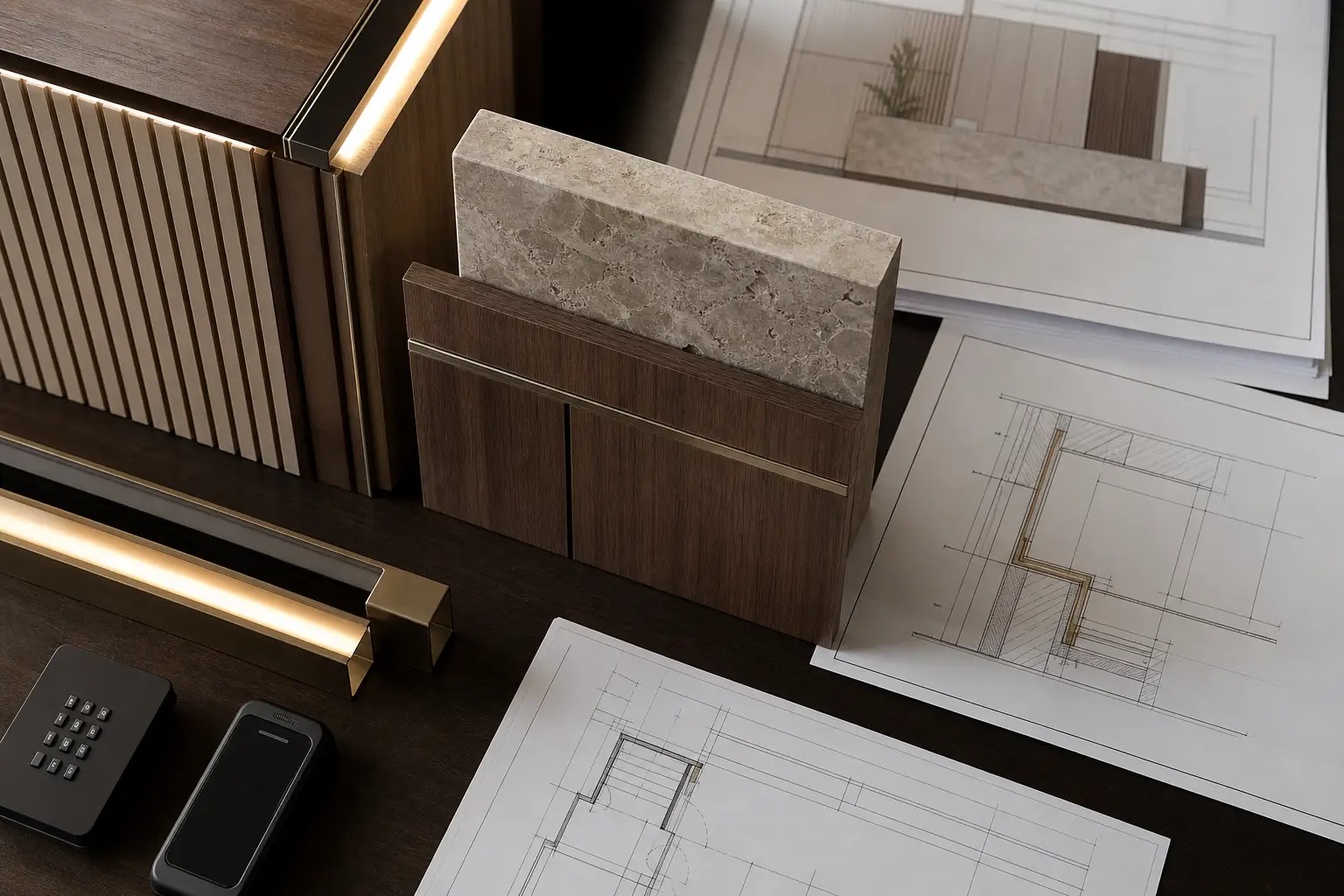
Reception work often looks compact, but it depends on precise coordination between joinery, MEP, lighting, access systems, ceilings, glazing, and finishes. A commercial contractor should issue shop-drawing reviews, sequence hold points, and confirm that services land exactly where the desk, signage, and hardware require them.
Poor coordination usually reveals itself late: feature lighting centred on the wrong axis, floor boxes misaligned with the desk, return-air grilles interrupting a clean wall, or access-control hardware added after stone and veneer are already fixed. Those problems are not styling issues — they are supervision failures.
If the project sits inside a broader commercial construction or office fit-out programme, request a dedicated reception sign-off stage before the wider handover. Front-of-house defects are disproportionately visible, so they should not be left to the final day.
Handover checks before the reception goes live
Before the reception opens, test more than the visual finish. Confirm that signage reads correctly from the entry, front-desk lighting flatters faces without glare, storage and cable management work for staff, and visitor routes remain clear once loose furniture is in place.
Run through practical checks as well: access-control devices, intercoms, power points, concealed storage, door closers, guest seating stability, and cleaning access around desk bases and wall reveals. Many defects only appear when the space is used, not when it is photographed empty.
When you are ready to brief HYMRO, share floor plans, current shell condition, expected guest volume, and whether the reception is part of a wider office fit-out or a focused front-of-house upgrade. That helps define whether the project is primarily office interiors, a commercial construction package, or a phased reception-led intervention.
For workplace performance decisions beyond reception, see office interior design in Damascus. For full floor delivery, see office fit-out in Damascus. Contact HYMRO with plans and photos; the delivery process and overseas Syrians pages explain hold points, handover checks, and remote approval rhythm.