
Can overseas owners approve renovation materials remotely in Syria?
Yes — if you use labelled samples, consistent photography, written options, deadlines, and one accountable channel for approve, reject, or approve with conditions. You do not need to be in Damascus to stay in control of stone, tile, timber, paint, or fixtures.
Most overseas owners worry about cracked plaster or delayed subcontractors. The quieter risk is slower: materials and finishes approved too late, too vaguely, or from photos that do not represent the batch that will be installed. In diaspora construction, a property renovation can lose weeks when finishes are still pending while the site is ready to install them. For overseas Syrians, approving finishes is programme control that sits beside payment gates, access arrangements, and remote project management.
This guide focuses on that method — how to approve renovation materials remotely Syria without turning WhatsApp into a chaotic showroom, and without locking yourself into finishes you cannot live with once you walk the finished rooms.
What should you approve before the first major order?
Remote approval works best when it starts as a schedule, not as a reaction. Before mobilisation, ask for a materials and finishes matrix that lists every high-impact item.
1. Flooring stone or ceramic, wall finishes, bathroom tile, and wet-area waterproofing system references.
2. Timber doors and skirts, kitchen fronts and worktops, sanitaryware and taps, hardware, and ironmongery.
3. Paint systems and any decorative metal or glass packages — each line with room, specification basis, proposed option, alternative, target approval date, and slip consequence.
That matrix becomes the owner's map for remote project management long before the first sample pack arrives. Owners who want structural control of the wider programme should also align finish gates with HYMRO project management and the delivery process. Material approvals belong inside the programme, not after trades start guessing.
How do you approve renovation materials remotely with evidence you can trust?
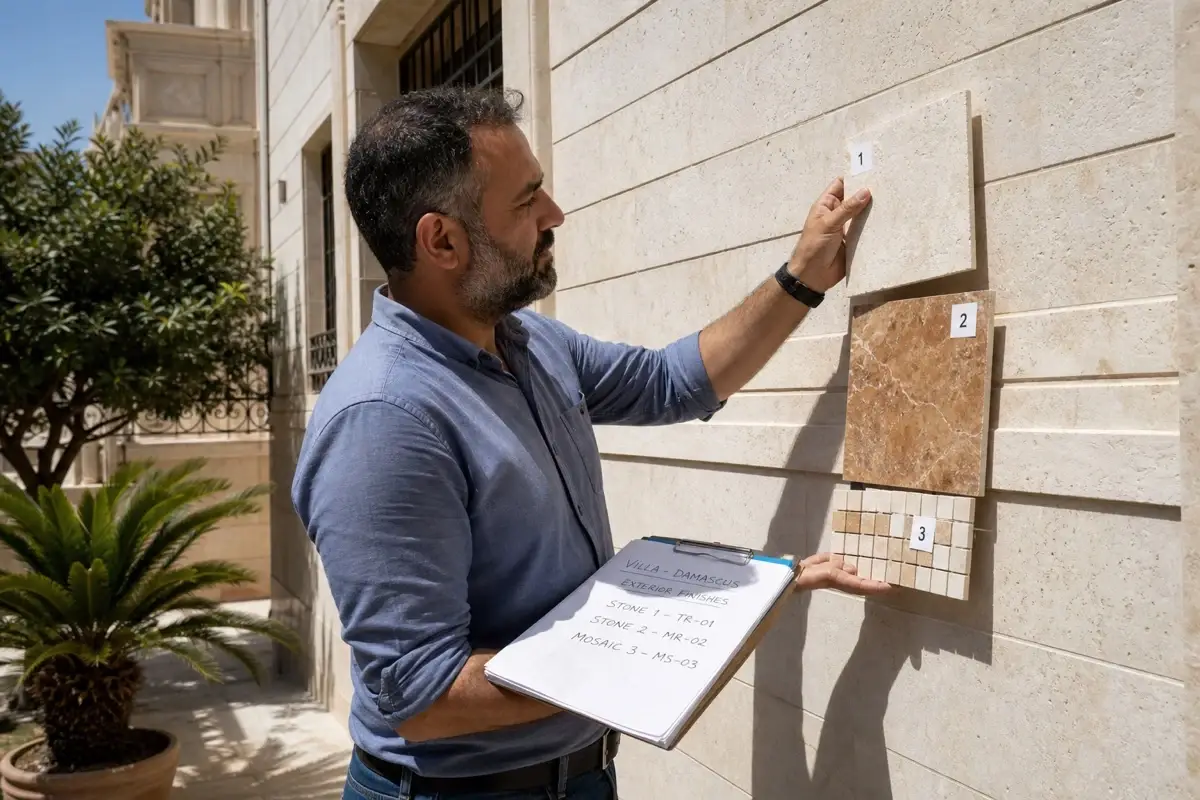
Phone photographs alone rarely protect you. To approve renovation materials remotely Syria, request packs that show the same sample in consistent daylight, against a neutral background, with a scale object and a handwritten or printed code matching the matrix line. Side-by-side options should use the same camera distance and colour temperature so you are comparing products, not photography.
Ask for three layers of evidence: the finished sample face, the edge or thickness where relevant, and a short note on availability, lead time, maintenance, and where it will appear on site. For stone, ask whether the photo is a representative batch or a premium hand-picked slab. For timber and veneer, ask for grain direction and batch matching rules. For paint, ask for wet-to-dry notes and a boarded mock-up under site lighting if the shade is critical.
When a family representative attends a showroom or supplier yard in Syria, they can collect and photograph samples — but the formal approval or rejection decision should still sit with the overseas owner unless authority has been written down. Diaspora construction fails when a relative, a supplier, and an overseas owner each think they own the finish decision.
Why set finish standards, not only product names?
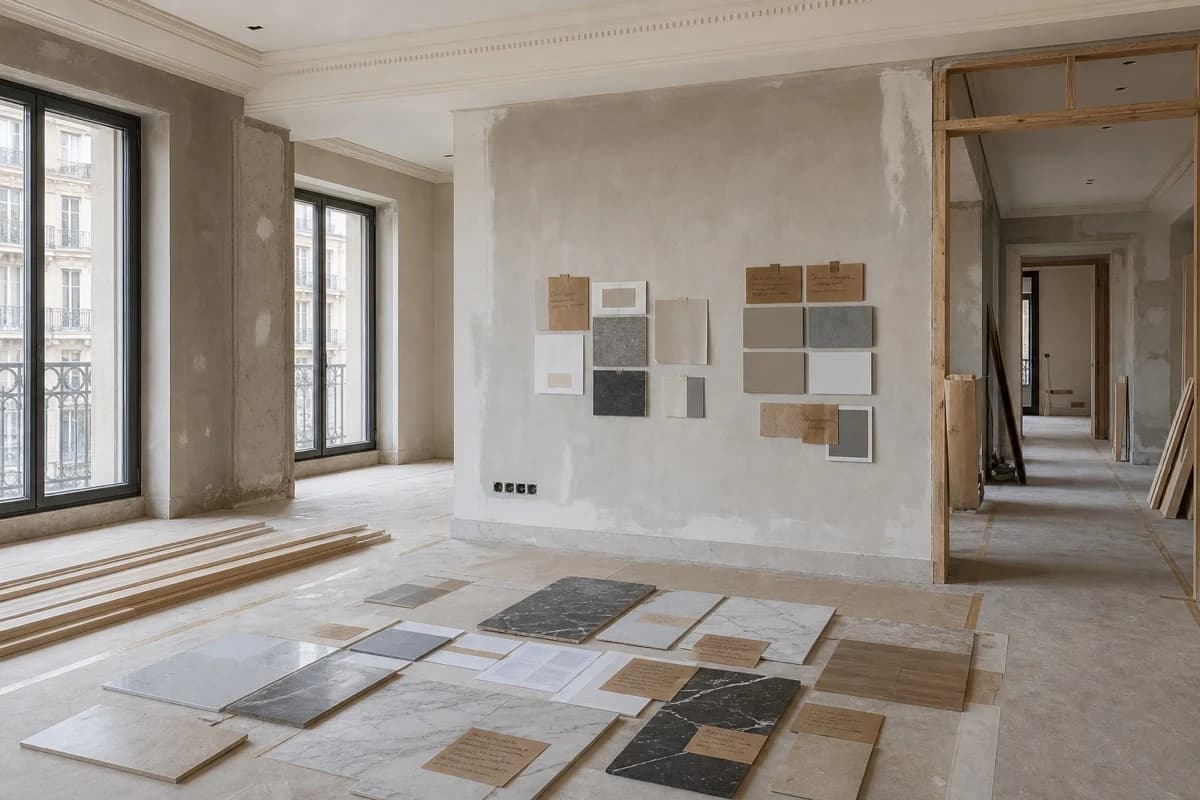
Approving a brand or a catalogue code is incomplete if the acceptance standard stays vague. For each package, define what "approved" means: colour tolerance, joint style, polishing grade, edge profile, previously rejected veining, and alignment with an adjacent floor — including where joins are allowed to land.
Write those standards into the purchase or fabrication instruction. Remote project management needs someone on site who can reject a wrong batch before installation covers the evidence. Owners abroad should also ask how rejected material is photographed, quarantined, and replaced so a substitution does not arrive silently.
For high-finish residential work, align material choices with the craftsmanship expectations in luxury renovations and, where relevant, lessons from completed residential case studies such as Damascus villa restoration. Standards reduce the chance that remotely approved beauty fails under Syrian daylight and local fixing conditions.
How should milestone reports clock material approvals?
Materials approval should appear in milestone reports as timed decisions, not as informal reminders buried under progress photos. Each week, the report should list open finish items, the evidence already sent, the remaining owner choice, the deadline tied to procurement or fixing, and the programme impact if the decision is late.
A practical cadence is simple: critical path finishes get an approval window of several clear days, not overnight WhatsApp voting. Non-critical decorative items can wait, but wet-area tile, stone thresholds, joinery finishes, and painted accent walls that need mock-ups should never wait until trades are standing idle.
Owners who already use structured weekly reporting — as explained in our guide to remote construction management reports — can treat finish packs as attachments to the same rhythm. Milestone reports then justify both progressive payments and material releases with one audit trail.
Approve, reject, or approve with conditions — decision checklist
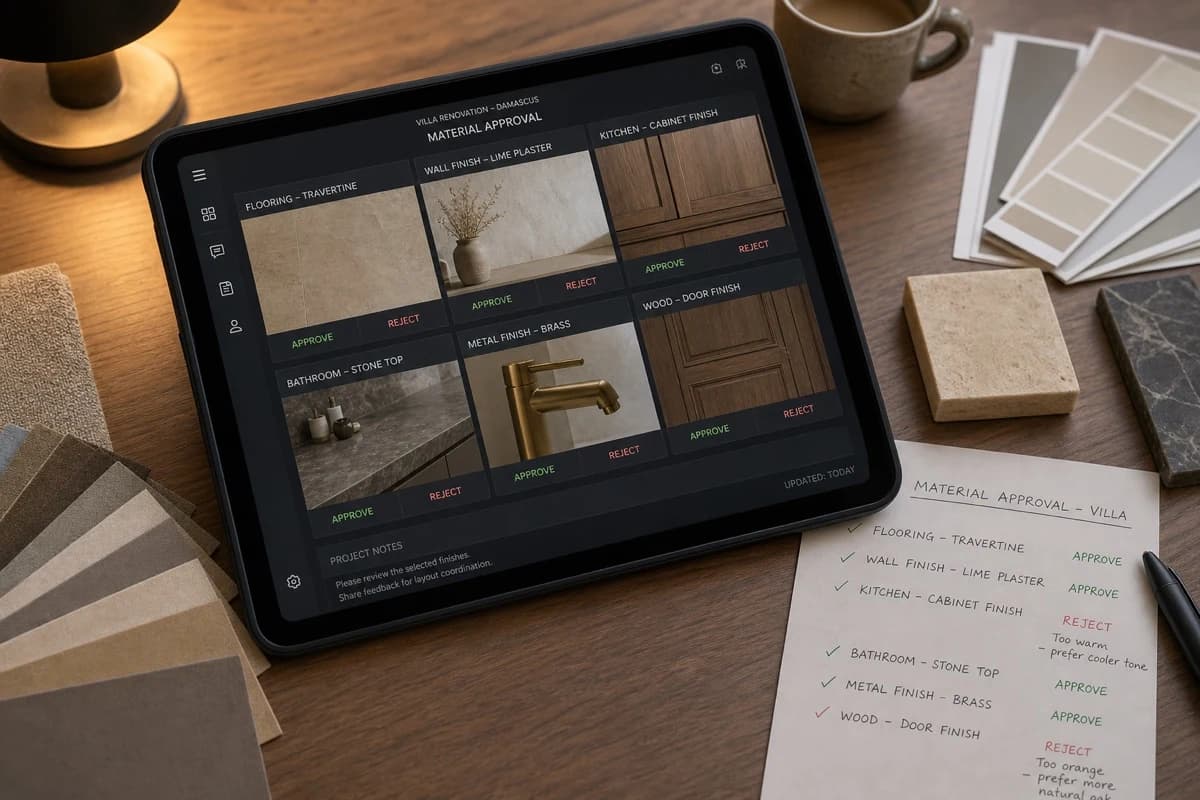
Remote sign-off needs three clean statuses. Keep the decision in the same channel that houses the matrix and the reports:
1. Approve: the exact sample code may be ordered and installed.
2. Reject: the option is closed and an alternative is required.
3. Approve with conditions: yes, if a lead time, polish grade, batch note, or adjoining finish is confirmed in writing first.
Comments scattered across chat groups create conflicting instructions, especially when several family members review the same property renovation from different cities. After approval, request confirmation of the purchase order reference, expected delivery window, and the site hold point before installation.
When should HYMRO run the materials approval chain?
Ask HYMRO to run the materials chain when the property is high-finish, when several rooms share matching batches, when suppliers change mid-programme, or when you cannot visit before fixing begins. The value is not only prettier bathrooms — it is fewer mismatched parcels, clearer rejection of wrong deliveries, and finish decisions that respect both budget and programme.
If you are still assembling title documents, brief packs, and access plans, start with renovating a home in Syria from abroad, then use this materials method once scope and rooms are fixed. To begin an approval pack for your Syrian project, share room lists, reference photos, budget bands, and preferred samples through contact — or brief the overseas Syrians pathway so finish gates sit inside remote project management from day one.